Hitting, biting, lying & defiance
Why Does My Toddler Hit When Angry?
By Raised Editorial · ·
Almost every toddler hits at some point, and it is not a sign of a bad child or a failing parent. It is a feeling arriving before the words and self-control to handle it, and here is what helps in the moment.
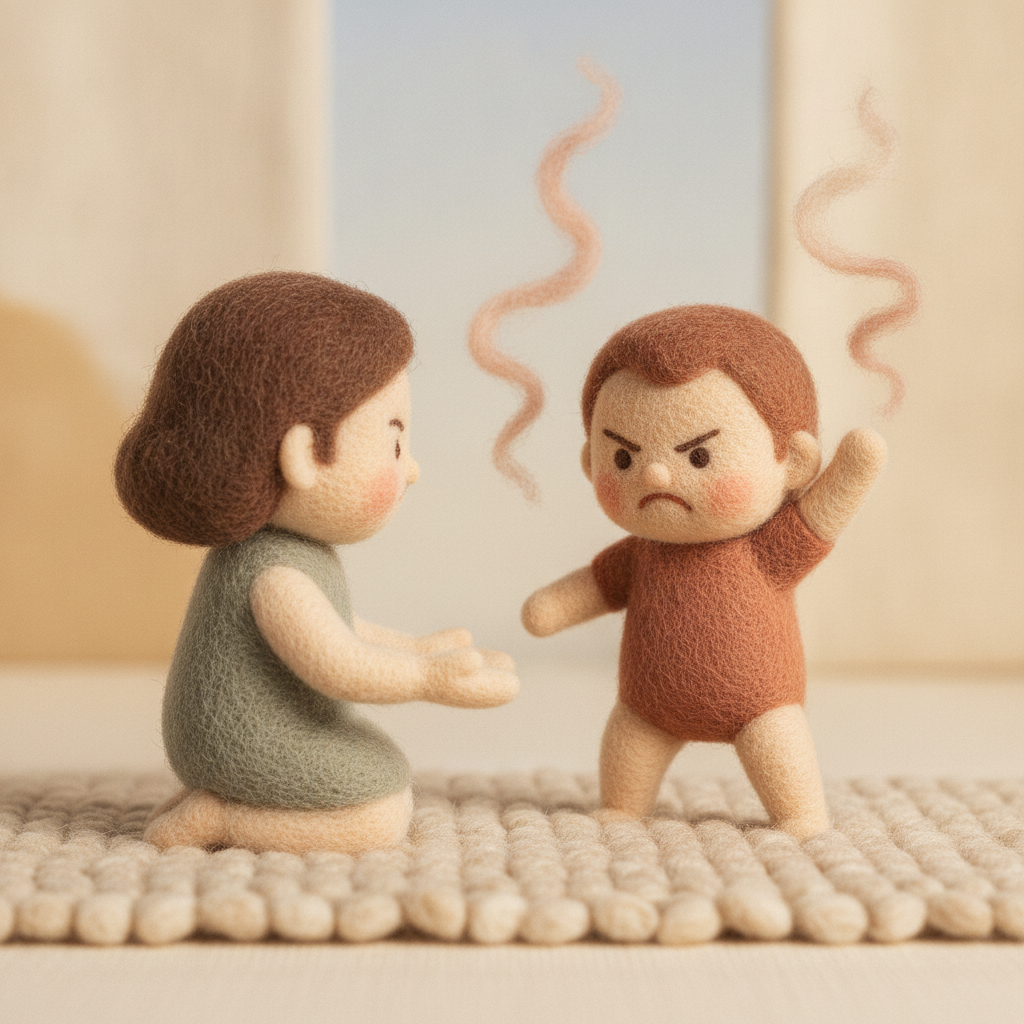
You say no. Your toddler looks straight at you and hits.
It can feel shocking, especially when you have explained many times that hitting hurts. But knowing the rule and being able to follow it while furious are two different skills.
Toddlers may hit when a feeling or an immediate want is bigger than the words and self-control they can use in that moment. Most young children hit, bite, or push at some point, and for most it fades as language and self-control grow. It does not mean your child is bad, and the NHS notes it does not mean they will grow up to be aggressive. It does mean they need you to stop the behaviour and teach a safer response.
Why toddlers hit
Anger is one reason, but not the only one. A toddler may hit because they are:
- Frustrated or unable to explain what they want
- Tired, hungry, rushed, or overwhelmed
- Fighting over a toy or your attention
- Excited and using more force than they realise
- Testing what happens next
The American Academy of Pediatrics notes that young children may lash out because they do not yet have enough self-control to express anger peacefully. That ability develops gradually and needs practice.
What to do when your toddler hits
In the moment, keep it simple.
- Stop the hit. Block another swing or create space. Check first on anyone who was hurt.
- State the limit. "I won't let you hit. Hitting hurts."
- Teach later. Once things are calmer, practise one alternative: "say stop," "ask me for help," or "move back."
Choose something your child can actually do. A younger toddler may need a gesture or one word. An older child may be able to explain what happened.
The aim is not to make anger disappear. It is to give anger a safer way out.
Look for the pattern
If hitting keeps happening, notice what comes before it. Is it usually at the end of the day? Around a sibling? When screen time ends? During noisy play?
Patterns suggest practical changes. A warning may soften a difficult transition. Staying close may help with predictable toy conflicts. An easy word or gesture may help when language fails.
Avoid hitting back, shaming your child, or demanding a long apology. Describe the behaviour, not the child. "I won't let you hit" teaches more than "you are naughty."
When to ask for help
Talk to your child's pediatrician, GP, health visitor, or nursery if hitting is frequent, has been getting worse for more than a few weeks, is causing injuries, is leading to exclusion from childcare, or is making you fear for someone's safety. Ask too if you have concerns about communication, hearing, development, sleep, or a sudden change in behaviour.
You do not need to work out the reason alone before asking.
The part to remember
Your toddler is not defined by the moment they hit, and you are not failing because one calm sentence did not stop it overnight.
Stop the hit. Keep the message short. Practise another response later. These are small lessons, repeated many times, and that is how the skill grows.
Related: How to Set Boundaries Without Shouting and Biting at Nursery or Daycare