Hitting, biting, lying & defiance
Why Does My Toddler Say No to Everything?
By Raised Editorial · ·
The endless no can feel like your toddler is picking a fight. Usually it is something gentler: they have just worked out they are their own person, and no is the most powerful word they own.
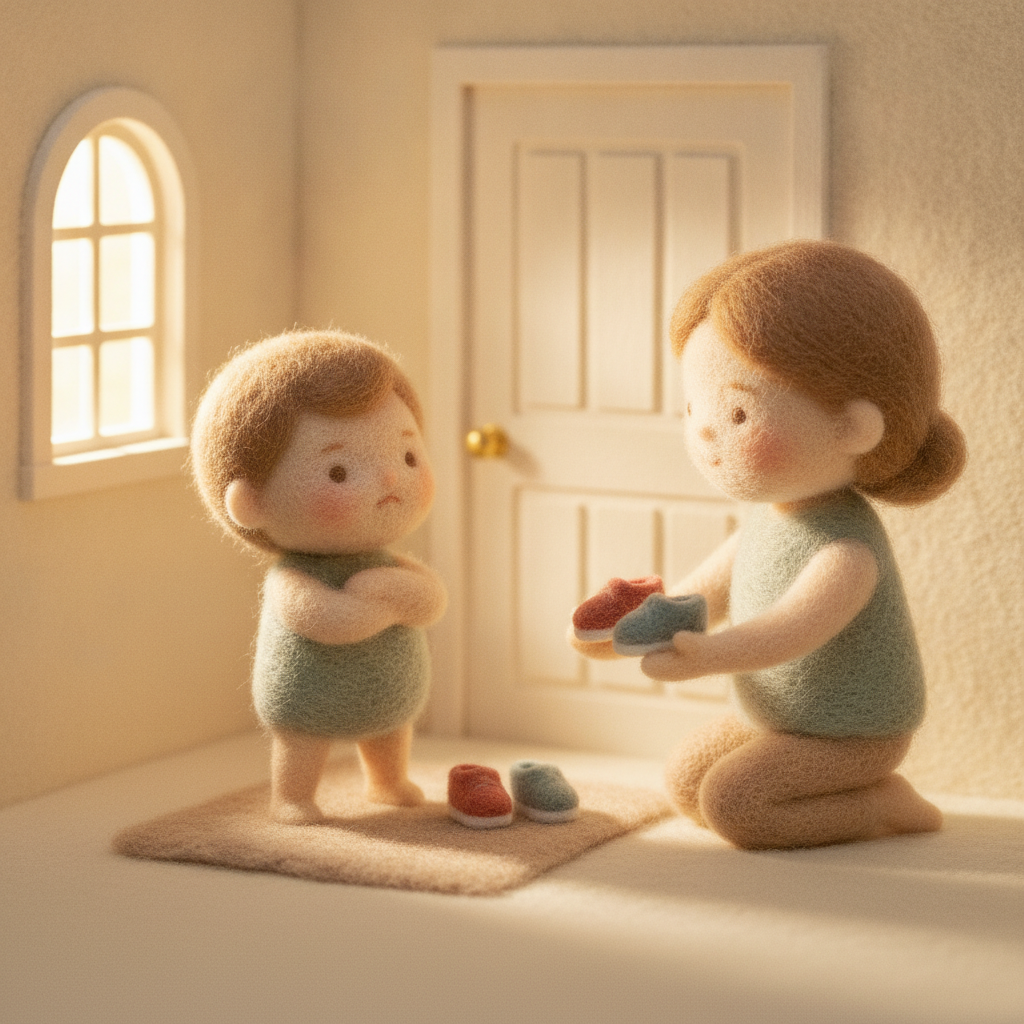
Shoes? No. Bath? No. Banana? No, even though they asked for the banana thirty seconds ago.
The constant refusal can feel like deliberate opposition. Often it is something more ordinary: your toddler has discovered that they are a separate person, and "no" is one of the most powerful words they own.
What the no is doing
Toddlers have very little control over their day. Adults decide when they wake, leave, eat, dress, and sleep. Saying no lets them test independence and find out which parts of the world they can influence.
They may also say no because:
- The direction was too long or unclear
- They need more time to change activities
- They are tired, hungry, or overwhelmed
- The question sounded optional
- Saying no has become an interesting game
It is not always a power struggle unless both of you get pulled into making it one.
Ask less, tell more clearly
If something is not optional, do not frame it as a yes-or-no question.
Instead of "Would you like to put your shoes on?" try:
"It is time for shoes. Red shoes or blue shoes?"
The limit stays with you. The small choice belongs to your child.
Make directions easier to follow
Get close, use one instruction, and say exactly what you want:
- "Put the car in the box."
- "Hold my hand near the road."
- "Sit down so I can help with your coat."
Young children may struggle with several instructions at once. What looks like refusal can sometimes be confusion or inability.
That is also worth a check-in when it keeps happening. If your child often does not respond to their name or to simple directions, or their speech or understanding seems behind, mention it to your GP, health visitor, or pediatrician. Hearing and language are straightforward to check, and a child who is not taking the direction in is not refusing it.
Leave room for harmless nos
When it is safe, let no work. Perhaps they do not want a hug, the green cup, or the song you chose. Having some real control can reduce the need to fight for it everywhere.
You do not have to win every no. Save your firmest limits for safety, health, hurting, and the routines that truly matter.
The hidden progress
"No" is exhausting, but it is also a sign that your child is practising a voice of their own. Your job is not to silence that voice. It is to help them learn where choice is possible and where a steady boundary keeps everyone safe.
Related: How to Set Boundaries Without Shouting and Why Does My Toddler Scream for Everything?