Feeding
My Toddler Only Eats Beige Food: What to Do
By Raised Editorial ·
If your toddler's diet consists entirely of bread, crackers, plain pasta, and cheese, you are not alone. Here is the sensory reason why toddlers love beige food, and how to gently add color to their plate.
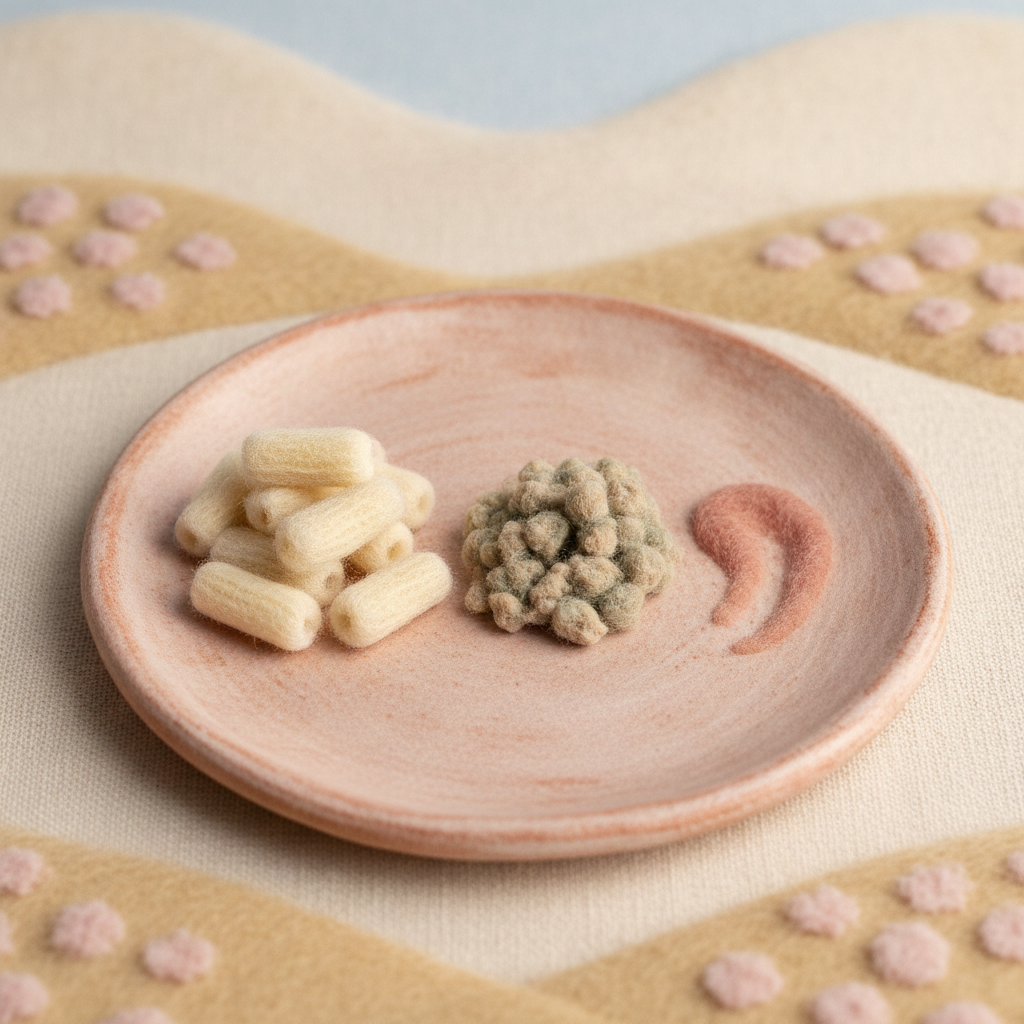
Look at the standard menu of any children's restaurant in the world, and you will notice a striking color palette: beige.
Chicken nuggets. French fries. Macaroni and cheese. Plain pasta. Buttered toast. Crackers.
It is incredibly common for toddlers to go through a phase where they exclusively demand "beige foods" and violently reject anything green, red, or brightly colored. Parents often panic, assuming their child will develop scurvy or severe nutritional deficiencies if they don't eat a vegetable immediately.
However, this preference for beige food is deeply rooted in both evolutionary biology and sensory processing. Here is a clinical look at why toddlers love beige, and how to gently broaden their palate.
The Sensory Predictability of Beige
To understand why a toddler loves a plain cracker but hates a blueberry, you have to look at the sensory experience of eating.
When a toddler bites into a branded cheese cracker, they know exactly what will happen. It will be crunchy, it will taste salty, and it will break apart in exactly the same way every single time. Beige, processed foods are 100% predictable.
Conversely, a blueberry is terrifyingly unpredictable. One blueberry might be sweet and firm. The next one might be mushy and incredibly sour.
For a toddler whose brain is undergoing massive neurological changes and who feels like they have very little control over their chaotic world, sensory predictability is deeply comforting. A bowl of plain pasta is safe. A mixed vegetable stew is a sensory minefield.
The Biology of Carbohydrates
Beige foods are almost entirely simple carbohydrates.
From an evolutionary standpoint, a toddler's brain is wired to seek out high-energy, easy-to-digest calories to fuel their rapid brain development and their newfound ability to walk and run. Carbohydrates are the most efficient energy source on the planet.
Furthermore, in nature, things that are sweet or starchy (like fruit and tubers) are safe to eat. Things that are green and bitter (like broccoli or spinach) trigger a biological warning system that they might be poisonous. Your toddler is biologically programmed to prefer bread over kale.
How to Bridge the Beige Gap
If your toddler is stuck in a beige rut, you cannot force them out of it. Pressuring them to eat a green bean will only make them dig their heels in.
Instead, you must use their love of beige to your advantage, employing a clinical technique called Food Chaining.
1. Change the Shape
If they only eat plain pasta, do not suddenly offer them pasta with red sauce. Change the shape of the pasta. If they eat penne, serve them farfalle (bowties) or macaroni. This teaches their brain that a slight visual change is still safe.
2. Introduce "Safe" Dips
Dips are a fantastic way to introduce new flavors while keeping the sensory experience predictable. If they love beige crackers, offer them hummus (which is also beige, but introduces new proteins and garlic flavors). Offer plain yogurt or a mild cheese sauce for them to dip their beige bread into.
3. Deconstruct the Meal
Toddlers hate mixed foods because they cannot visually identify what they are eating. Never serve a toddler a casserole or a stew. If you are making spaghetti bolognese, serve it deconstructed: a pile of plain pasta, a tiny separate pile of meat, and a tiny separate smear of sauce. Let them explore the components individually.
4. Hide Nutrition in the Beige
While you should always continue to offer whole vegetables (exposure is key), you can ethically "hide" nutrition in their safe beige foods to ease your own anxiety.
- Blend cauliflower or white beans into macaroni and cheese sauce.
- Bake zucchini or sweet potato puree into beige muffins.
- Mix chia seeds or flaxseed into plain oatmeal.
When to Worry
If your toddler's beige diet consists of at least a few different textures (crunchy crackers, soft pasta, chewy cheese), they will likely outgrow this phase with continued, low-pressure exposure to other foods.
However, if they restrict their diet to only 2 or 3 specific brands of beige food (e.g., they will only eat Ritz crackers, never Saltines), or if they gag at the sight of anything non-beige, consult your pediatrician to rule out a sensory processing disorder or a pediatric feeding disorder.