Motor, language, cognitive & social milestones
How Shared Experiences Boost Cognitive Growth
By Raised Editorial · ·
Discover how shared experiences shape your child’s cognitive development. Learn about Vygotsky’s insights into the social nature of learning and how you can support your child’s growth through meaningful interactions and scaffolding techniques.
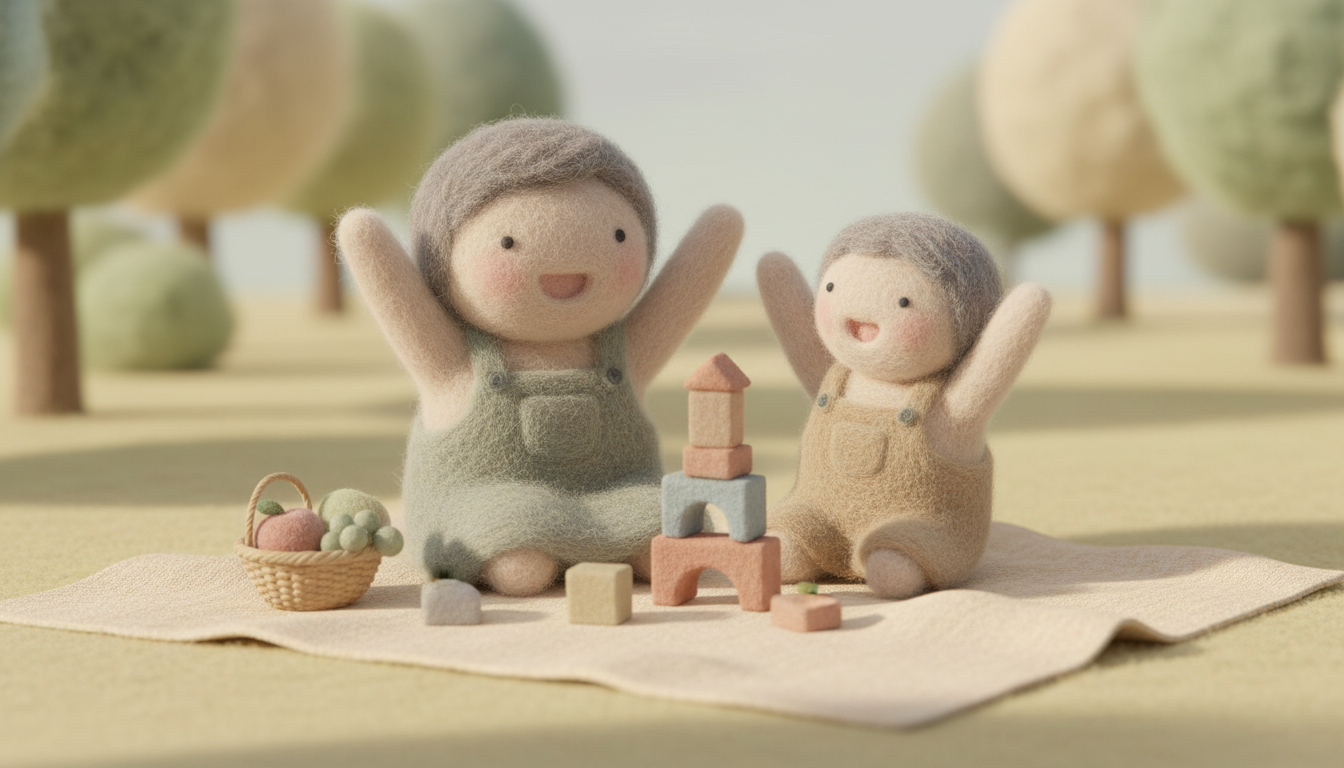
Imagine your baby gazing into your eyes, inviting you into a shared world of discovery. In child development, we often see the mind as a lone explorer, navigating logic and reasoning. Jean Piaget described children as "little scientists," experimenting to build their mental universe. However, Lev Vygotsky, a pioneering Russian psychologist, offered a profound perspective: the mind is inherently social. Cognitive growth, he suggested, is a shared journey through a "social matrix" involving interactions with family, teachers, and culture.
The Matrix of Development
Vygotsky believed we exist within an intricate cultural and social matrix. Unlike theories that view the environment as merely a backdrop, the sociocultural approach sees children and their environment as a single, inseparable entity. Activities like playing with blocks, exploring digital worlds, or attending school act as scaffolding, shaping our mental structures. Cognitive growth isn't just about unlocking potential; it's crafted in the spaces between us.
The Zone of Proximal Development (ZPD)
Vygotsky's concept of the Zone of Proximal Development (ZPD) is pivotal. It represents the space between what a child can do independently and what they can achieve with guidance. He proposed that a child's ability isn't fixed but exists on a spectrum. The ZPD is where skills are blossoming. By focusing on activities within this zone, parents and educators can guide children toward new understanding.
Scaffolding: The Architecture of Learning
To help children navigate their ZPD, we use scaffolding. Like temporary structures in construction, scaffolding provides support to achieve goals beyond a child's current capabilities. Scaffolding includes:
- Physical Guidance: Holding a toddler’s hand as they learn to climb stairs.
- Verbal Hints: Offering reminders like "What happens if we swap the numbers?" to assist in problem-solving.
- Modeling: Demonstrating actions, such as solving a puzzle, for the child to observe and internalize.
Scaffolding is temporary. As children gain confidence, the support is gradually withdrawn, allowing them to master skills independently.
From Intermental to Intramental
A core idea in Vygotsky's theory is that "the intermental constructs the intramental." Developmental functions appear first socially, then individually. Picture a parent and child solving a puzzle together, exchanging ideas. Over time, the child internalizes this dialogue, engaging in private speech. As they grow, this evolves into inner speech—the silent dialogue guiding adult thinking. Social interactions become powerful cognitive tools.
Cultural Tools and Higher Mental Functions
Culture provides tools that transform basic abilities into advanced functions like abstract thinking. These tools include:
- Language: A potent tool for representing the unseen and planning.
- Literacy and Numeracy: Writing and math systems expand memory and enable complex analysis.
- Technology: Computers and digital media reshape information access and processing.
Different cultures value different tools, shaping unique cognitive skills. Whether learning to navigate woods through oral tradition or mastering coding, a child's "social brain" thrives in its cultural setting.
What You Can Do Today
- Engage in shared activities that challenge your child's thinking.
- Use verbal hints and questions to guide problem-solving.
- Model tasks and gradually reduce assistance as your child gains confidence.
- Introduce cultural tools like language games and puzzles.
- Encourage private speech by talking through tasks together.
A Final Thought
Understanding the social nature of the brain shifts focus from what a child is to what they can become through interaction. By creating rich social environments and offering appropriate scaffolding, you lay the foundation for cognitive growth. You are your child's first and greatest teacher, crafting a world of limitless possibilities together.