Play as brain-building
How Play Shapes Your Child's Brain Development
By Raised Editorial · ·
Play is more than fun for children—it's how they learn and grow. From exploratory play in infancy to social play with peers, each type helps build essential cognitive, social, and emotional skills. Discover how you can support your child's development through playful interactions.
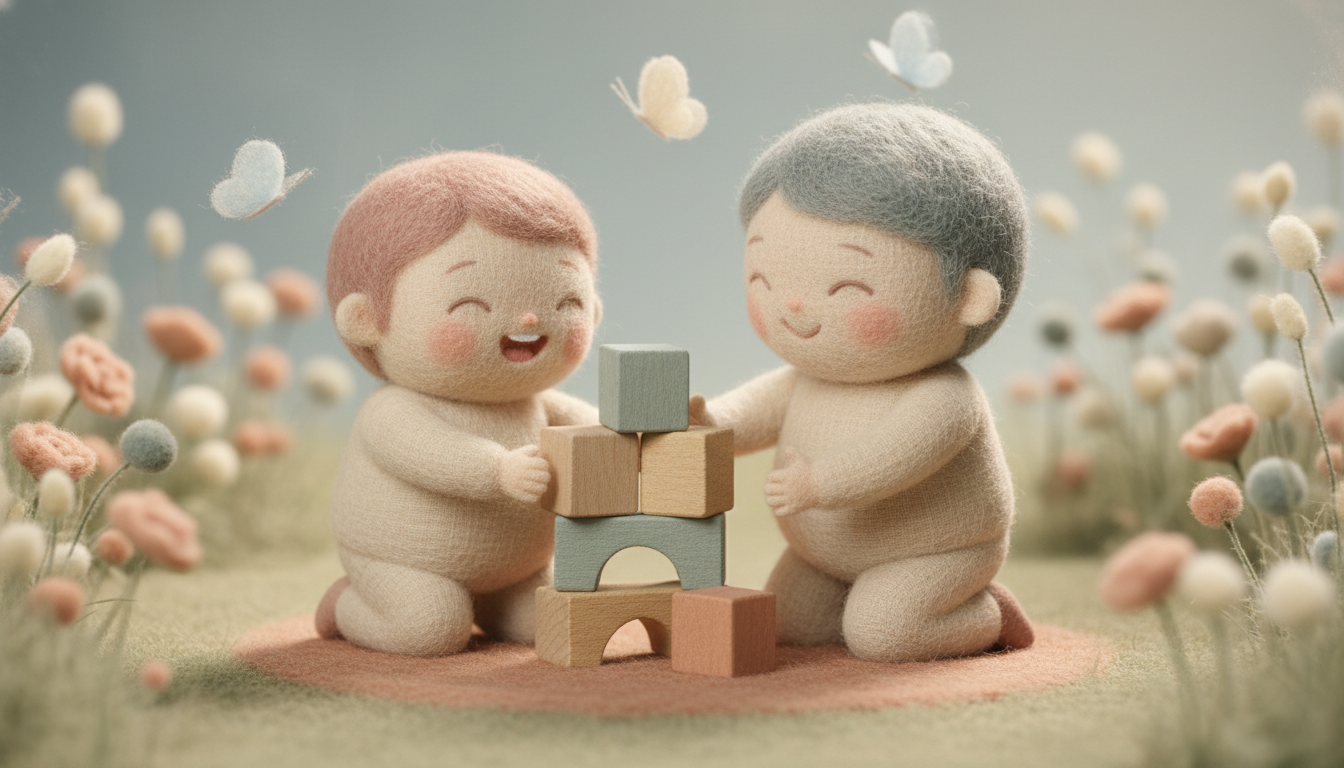
Picture the moment your baby first reaches for a rattle, eyes wide with wonder. To them, it's pure delight. But for developmental experts, this is where growth begins. Play is the essential "work" of childhood, where children craft the cognitive, social, and emotional skills that will last a lifetime.
Types of Play and Their Benefits
Exploratory Play (Infancy)
Visualize your baby as a tiny explorer, using their senses to learn about the world—mouthing, banging, and dropping objects they encounter.
- Benefit: This exploration builds spatial awareness and understanding of physical properties, much like an architect laying the first brick.
Symbolic/Pretend Play (Toddlerhood+)
See your toddler using a block as a phone or imagining themselves as a superhero with a cape.
- Benefit: This marks a cognitive leap, as they learn to use one object to represent another—a skill crucial for reading and math. They're weaving stories from reality's threads.
Social Play
Observe your child interacting with peers or parents, joining a lively group like a dancer.
- Benefit: This teaches turn-taking, empathy, and emotional regulation. "Rough and tumble" play helps manage high-energy states, like a dance balancing energy with grace.
Why "Open-Ended" Toys are Best
Imagine toys as blank canvases—blocks, scarves, or cardboard boxes—waiting for your child's imagination.
- Science: Open-ended play encourages "divergent thinking," the ability to find multiple solutions to a problem, similar to a painter seeing endless possibilities on a canvas.
The Role of the Parent
You are your child's first and greatest teacher. You don't need to entertain them constantly. Often, the best support comes through Scaffolding:
- Observe what your child is attempting, like a gentle guide.
- Offer a bit of help if they get frustrated (e.g., "Would the big block fit better on the bottom?").
- Step back and let them lead, allowing them to direct their play's orchestra.
What You Can Do Today
- Provide open-ended toys like blocks and scarves.
- Encourage pretend play with everyday items.
- Join in on their play, following their lead.
- Observe and support their play without taking over.
- Create a safe space for social play with peers.
A Final Thought
Remember, the most "educational" toy in the room is often you. Through interaction, shared joy, and joint attention, you guide your child's developmental journey. Embrace these playful moments—they're the foundation of their growth.