Tantrums & meltdowns
Tantrums and the missing brakes: why your toddler melts down, and what actually helps
By Raised Editorial · ·
Tantrums feel like a discipline problem. They are really a development story. Here is what is happening inside that small, overwhelmed brain, and the four things that help in the moment.
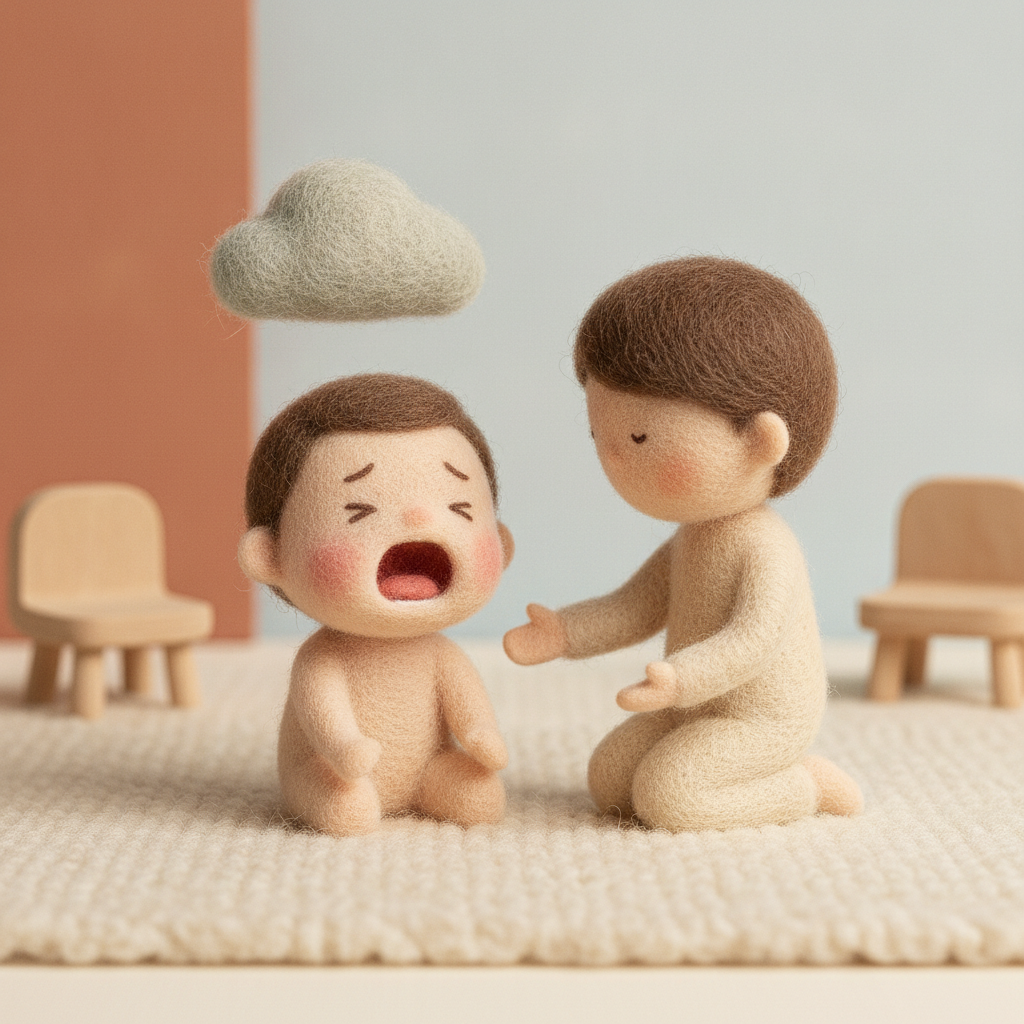
Your toddler wanted the blue cup. You gave them the blue cup. Now they are on the floor because you handed it over the wrong way, and no force on earth can fix it. If you have been there, you are not doing anything wrong, and neither is your child.
Tantrums feel like a discipline problem. They are actually a development story. Once you can see what is happening inside that small, overwhelmed brain, the meltdown stops feeling like a battle you are losing and starts feeling like a moment you can steer.
The meltdown is a brain state, not a bad choice
A tantrum is what a big feeling looks like when it arrives before the tools to manage it. Toddlers feel anger, disappointment and frustration at full volume, but the parts of the brain that help them pause, wait and calm down are still years from finished.
This is why tantrums cluster where they do. They usually start in the second year, around 12 to 18 months, peak between ages 2 and 3, and ease after age 3 as the brain matures. Your two year old is not choosing chaos. At this age they simply do not have much control over their emotional impulses yet, so frustration erupts suddenly as crying, hitting or screaming.
The missing brakes
Here is the piece that changes everything. Knowing a rule and stopping yourself from breaking it are two different jobs for the brain. Knowing "we do not hit" uses memory. Actually stopping the hand mid-swing uses inhibitory control, which lives in the prefrontal cortex, the brain's braking system.
That braking system is one of the last areas to mature. It develops slowly across early childhood and keeps strengthening for years. So when your child hits their sibling three seconds after telling you hitting is wrong, they are not being manipulative or two-faced. They had the knowledge. They did not yet have the brakes.
Understanding this is not an excuse for the behaviour. It is the reason the behaviour needs teaching and time, not punishment.
What actually helps in the moment
You cannot reason a toddler out of a meltdown, because the thinking part of their brain has temporarily gone offline. Your calm is the tool that brings it back.
- Steady yourself first. Take one breath before you do anything. Your child borrows your nervous system, and a calm adult is what tells their body the emergency is over.
- Name the feeling. "You are so angry the tower fell." Naming an emotion out loud helps the brain settle around it. You are not agreeing to fix it, you are showing them they are not alone in it.
- Hold the limit, kindly. Feelings are always allowed; some behaviours are not. "I won't let you hit. You can stomp your feet or squeeze this pillow." You can be warm and firm at the same time.
- Stay close and wait. The storm needs to move through. Your steady presence, more than any words, is what teaches their body that big feelings are survivable.
What to skip
A few things quietly make it harder: long explanations mid-meltdown (the logic brain is not listening yet), punishing the feeling itself (which teaches them to hide it, not manage it), and demanding they "calm down" (a skill they are still building). Save the teaching for later, when everyone is calm again. That is when it actually lands.
When it is worth a check-in
Almost all tantrums are normal and fade as the brakes grow in. Still, it is worth checking with your pediatrician if the meltdowns are extremely frequent or very long, routinely involve your child hurting themselves or others, include breath-holding until they pass out, or are getting worse rather than better past about age 4. Trusting that instinct is part of the job too.
The part nobody tells you
Tantrums are not a sign that you are failing. In a strange way they are a sign of trust: your child saves their hardest moments for the person they feel safest with. Every time you stay steady through one, you are not just ending a meltdown. You are helping build the very brakes they are missing, one calm repetition at a time. It is slow, unglamorous work, and it is working even on the days it does not feel like it.