Baby
Safe Sleep for Babies: What Parents Need to Know
By Raised Editorial ·
When you are severely sleep-deprived, safe sleep rules can feel overwhelming. Here is a clear, no-nonsense breakdown of the AAP's latest safe sleep guidelines to protect your baby from SIDS.
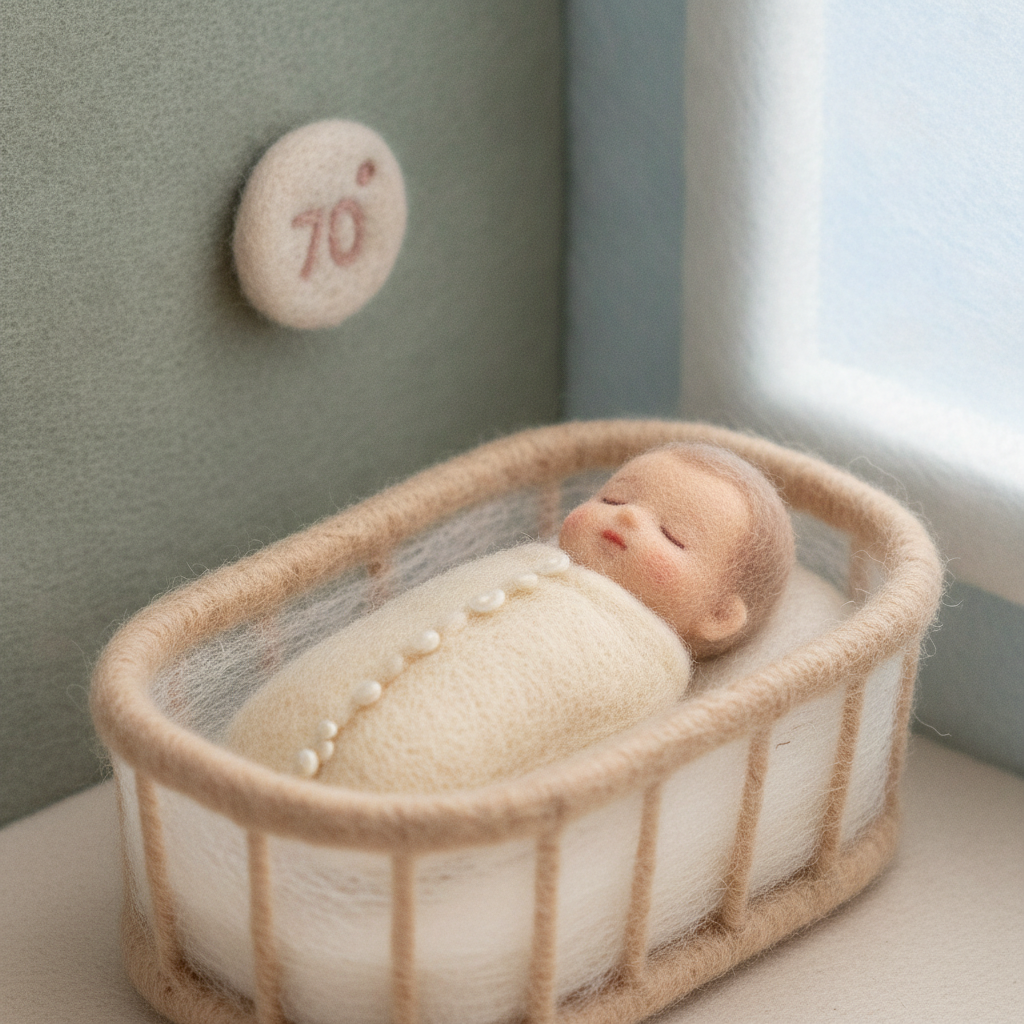
When you bring a baby home, the amount of fear you feel can be paralyzing, especially when it comes to sleep. You have likely heard of SIDS (Sudden Infant Death Syndrome), and as a sleep-deprived parent, trying to memorize a dozen different "safe sleep" rules can feel impossible.
However, the rules for safe infant sleep are not based on parental preference; they are based on rigorous scientific data. In 2022, the American Academy of Pediatrics (AAP) updated their safe sleep guidelines to reflect the latest evidence on how to protect infants during their most vulnerable first year.
Here is a clear, actionable breakdown of the rules you need to follow.
The Three Golden Rules (The ABCs of Safe Sleep)
If you remember nothing else, memorize the ABCs of safe sleep. A baby should sleep:
- A - Alone: The baby should sleep on their own sleep surface. Co-sleeping (sharing a bed with the baby) significantly increases the risk of suffocation. The crib should also be completely empty. No pillows, no blankets, no stuffed animals, and no bumper pads.
- B - on their Back: Always place your baby completely flat on their back for every sleep (naps and nighttime). Since the "Back to Sleep" campaign launched in the 1990s, SIDS rates have plummeted. Babies are anatomically less likely to choke on spit-up when sleeping on their backs.
- C - in a Crib (or Bassinet): The sleep surface must be firm, flat, and meet Consumer Product Safety Commission (CPSC) standards.
The Ban on Inclined Sleepers
One of the most critical updates to the AAP guidelines is the absolute ban on inclined sleepers.
Products like baby hammocks, sleeping pods, nests, and inclined rockers (such as the now-recalled Fisher-Price Rock 'n Play) are extremely dangerous. When a baby is propped up at an angle, their heavy head can easily slump forward, cutting off their own airway (positional asphyxiation).
The sleep surface must be completely flat, with an incline of no more than 10 degrees.
Room Sharing vs. Bed Sharing
The AAP strongly recommends room sharing (keeping the baby's crib or bassinet in your bedroom) for at least the first six months. Studies show this can decrease the risk of SIDS by as much as 50%, likely because the background noise of parents moving prevents the baby from falling into an unusually deep sleep.
However, the AAP explicitly warns against bed sharing. Adult beds have soft mattresses, heavy blankets, and pillows, all of which are deadly suffocation hazards for an infant.
- The Sofa Rule: Never fall asleep holding a baby on a sofa or armchair. This is one of the highest-risk scenarios for infant sleep death, as babies can easily become wedged between cushions or the sleeping adult.
Managing Temperature and Clothing
Overheating is a major risk factor for SIDS.
Do not use loose blankets to keep your baby warm. Instead, use wearable blankets (sleep sacks) or swaddles (only if the baby cannot roll over yet). Keep the room at a temperature that is comfortable for a lightly clothed adult (typically between 68°F and 72°F).
If your baby's chest or the back of their neck feels hot and sweaty, they are overdressed. Remove a layer immediately.
When you are exhausted at 3 AM, it is tempting to break the rules "just this once" so you can get some sleep. But safe sleep is non-negotiable. Following these guidelines ensures that every time you put your baby down, they are as safe as medically possible.