Baby
Why Your Newborn Only Sleeps When Held
By Raised Editorial ·
It is 3 AM, and the moment you put the sleeping baby in the bassinet, their eyes fly open. Here is the evolutionary reason why your newborn refuses to be put down, and how to survive it.
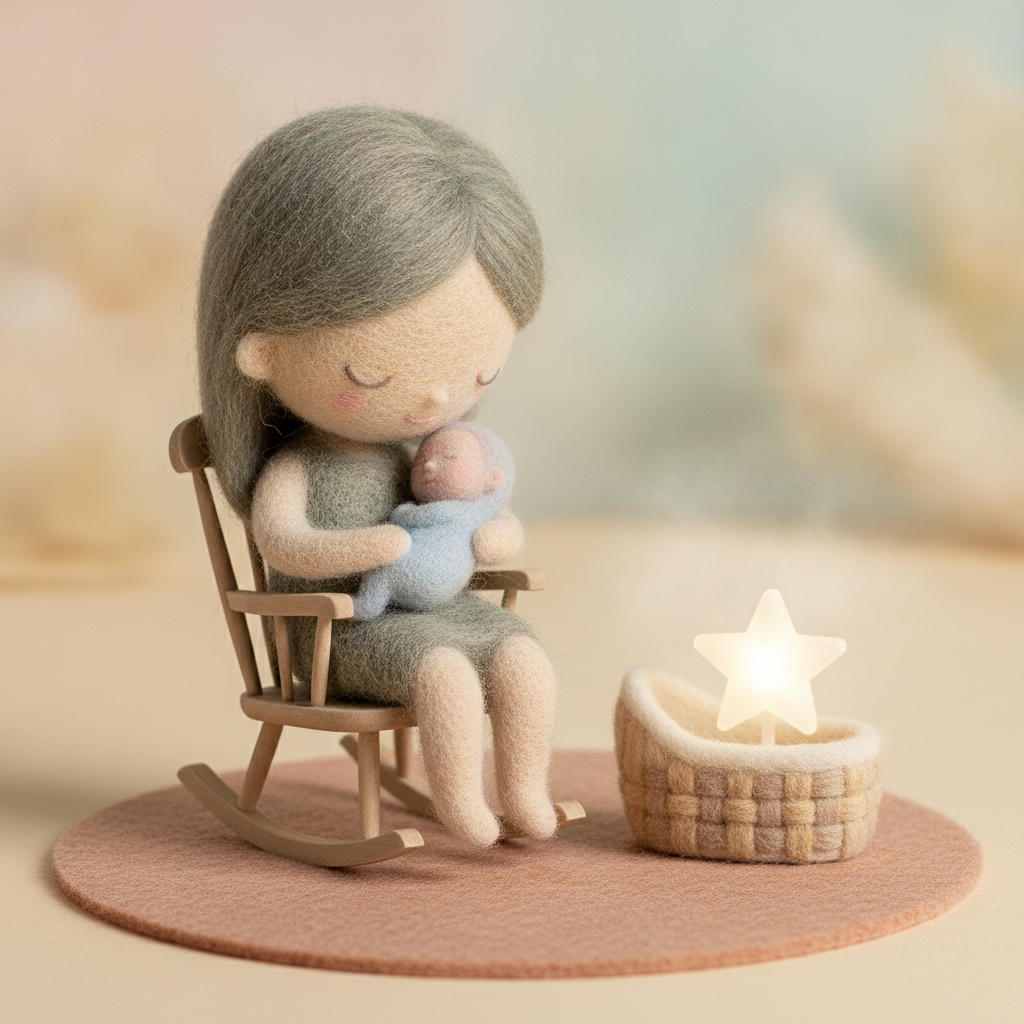
You spend twenty minutes rocking, bouncing, and shushing. The baby is finally deeply, heavily asleep. You tiptoe to the bassinet, holding your breath. You lower them down with the precision of a bomb disposal expert. You gently remove your hands.
Instantly, their eyes fly open, and they start screaming.
If you are currently trapped under a sleeping newborn, terrified to move because you know they will wake up if you put them down, you are not alone. And more importantly, you have not created a "bad habit."
Here is the biological and evolutionary reason why your newborn only wants to sleep on you, and how you can manage this exhausting phase safely.
The "Fourth Trimester" Biology
For nine months, your baby existed in an environment that was perfectly temperature-controlled. They were constantly held, constantly fed, and lulled to sleep by the rhythmic thumping of your heartbeat and the swoosh of your blood.
Then, they are born into a bright, cold, quiet world.
When you place a newborn on a flat, motionless, cold mattress, it is a sensory shock. To a newborn, your chest is their natural habitat. It smells like food, it sounds like safety, and it regulates their body temperature.
The Evolutionary Alarm System
From an evolutionary standpoint, human babies are born incredibly premature compared to other mammals. They cannot walk, run, or cling to a parent. Their only defense mechanism is to cry when they are separated from their caregiver.
Thousands of years ago, if a baby was put down alone in a cave, they were in mortal danger from predators or the cold. Your baby's brain does not know they are in a safe, modern nursery. When you put them down, their primitive brain triggers a panic response: "I am alone. I am in danger. Sound the alarm."
They are not manipulating you. They are surviving.
How to Survive the "Velcro Baby" Phase
Knowing why they do it doesn't make it any less exhausting when you haven't slept in three days. You cannot safely hold a baby 24/7. Here are strategies to help transition them to the bassinet:
1. Warm the Bassinet
Newborns hate the shock of cold sheets. Place a hot water bottle or a heating pad in the bassinet to warm the mattress. CRITICAL: Remove the heat source completely before placing the baby in the bassinet to avoid overheating or burns.
2. Wait for Deep Sleep
Do not try to transfer a newborn the moment their eyes close. Wait 15 to 20 minutes until they enter "Quiet Sleep." You can test this by lifting their arm and letting it drop (the "spaghetti arm" test). If they don't stir, they are in deep sleep and ready to be transferred.
3. The Transfer Technique
When lowering the baby, do not put them down flat on their back all at once. This triggers the Moro (startle) reflex, making them feel like they are falling. Instead, place their feet down first, then their bottom, then their back, and finally their head. Keep a firm hand on their chest for a minute after putting them down to reassure them you are still there.
4. Sleep in Shifts
If the baby absolutely refuses the bassinet, you and your partner must take shifts. One parent stays awake and holds the sleeping baby in a brightly lit room while doing something to stay alert (watching TV, listening to a podcast), while the other parent sleeps in a different room.
Never fall asleep holding your baby on a sofa or armchair, as this drastically increases the risk of SIDS and suffocation.
This phase is incredibly intense, but it is temporary. You cannot "spoil" a newborn by holding them. You are simply meeting their biological need for safety.