Baby
Newborn Day and Night Confusion: How to Fix It
By Raised Editorial ·
Is your baby sleeping soundly through the noisy afternoon, but wide awake and ready to party at 3 AM? Here is how to fix newborn day-night reversal.
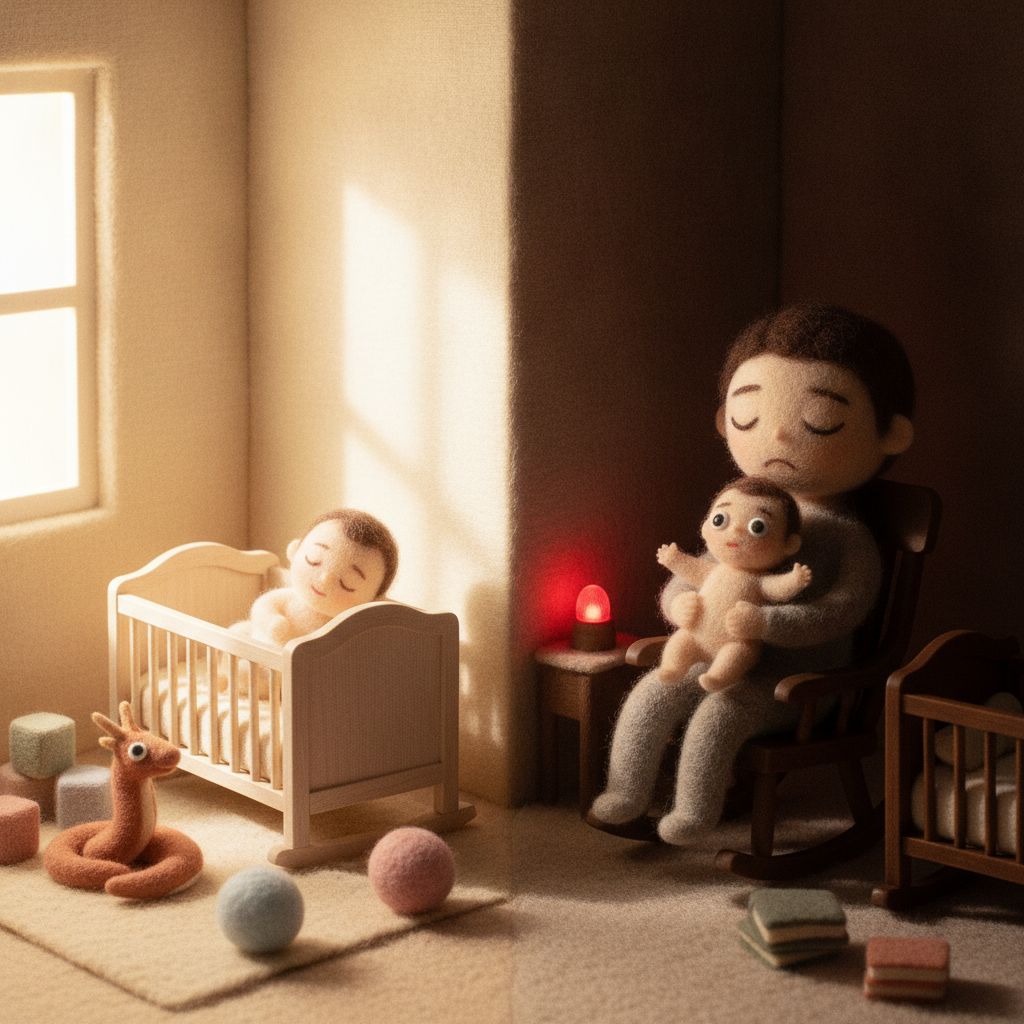
You spend all day trying to keep your newborn awake. They sleep through the dog barking, the vacuum cleaner, and bright sunlight. You think, "Great, they are such a good sleeper!"
Then the sun goes down. The house gets quiet. And suddenly, your baby is wide awake, demanding to eat every 45 minutes, staring around the dark room with bright, alert eyes.
Your baby has "day-night confusion" (also known as day-night reversal). It is incredibly common, incredibly exhausting, and completely fixable.
Why Day-Night Confusion Happens
When a baby is in the womb, there is no sunlight. Furthermore, the birthing parent's activity often rocks the baby to sleep during the day. When the parent lies down to sleep at night, the sudden stillness often causes the baby to wake up and start moving.
When they are born, newborns do not yet produce melatonin (the hormone that regulates the sleep-wake cycle based on light). They are operating on their womb schedule, where daytime was for sleeping and nighttime was for activity.
How to Reset Their Internal Clock
According to the American Academy of Pediatrics (AAP), you can help your baby establish a more "civilized" sleep routine by creating a stark, unmistakable contrast between daytime and nighttime.
Here is a step-by-step troubleshooting guide to fixing day-night confusion.
1. The Daytime Rules (7 AM to 7 PM)
During the day, your goal is to expose the baby to light, noise, and stimulation.
- Let the light in: Open all the curtains. If the weather is nice, take the baby outside for a walk. Natural sunlight is the strongest cue you can give a brain to stay awake.
- Do not tiptoe: When the baby naps during the day, do not put them in a pitch-black, silent room. Let them nap in a bassinet in the living room. Talk at normal volumes, play music, and run the dishwasher.
- Wake them for feeds: Do not let a newborn sleep for more than 3 hours at a time during the day. If they hit the 3-hour mark, gently wake them up, undress them a bit if necessary to keep them alert, and feed them.
- Playtime: After a daytime feed, keep them awake for a little while with "playtime" (tummy time, singing, or just making eye contact).
2. The Nighttime Rules (7 PM to 7 AM)
During the night, your goal is to make the environment as boring and unstimulating as possible.
- Keep it dark: Use blackout curtains. When they wake up to feed, do not turn on the overhead lights. Use a very dim, warm-toned nightlight (red light is best, as it doesn't suppress melatonin production).
- Keep it quiet: Talk in a whisper, if you talk at all. Do not make eye contact during night feeds; eye contact is highly stimulating for a baby.
- Business only: Nighttime feeds are strictly for business. Change the diaper, feed the baby, burp them, and put them straight back down. No singing, no playing.
Be Patient
You are attempting to reprogram a biological clock. It will not happen overnight.
Consistency is key. If you rigorously apply the Daytime Rules and Nighttime Rules, most babies will correct their day-night confusion within a week or two. Once they start sleeping their longer stretches at night, your own sleep deprivation will become much more manageable.