Play as brain-building
How Music Shapes Your Child's Brain
By Raised Editorial · ·
Music-making offers unique benefits for your child's developing brain. While the "Mozart Effect" is debunked, active engagement in music enhances brain functions, boosts literacy, and strengthens executive skills. Discover how incorporating music at home can support your child's growth.
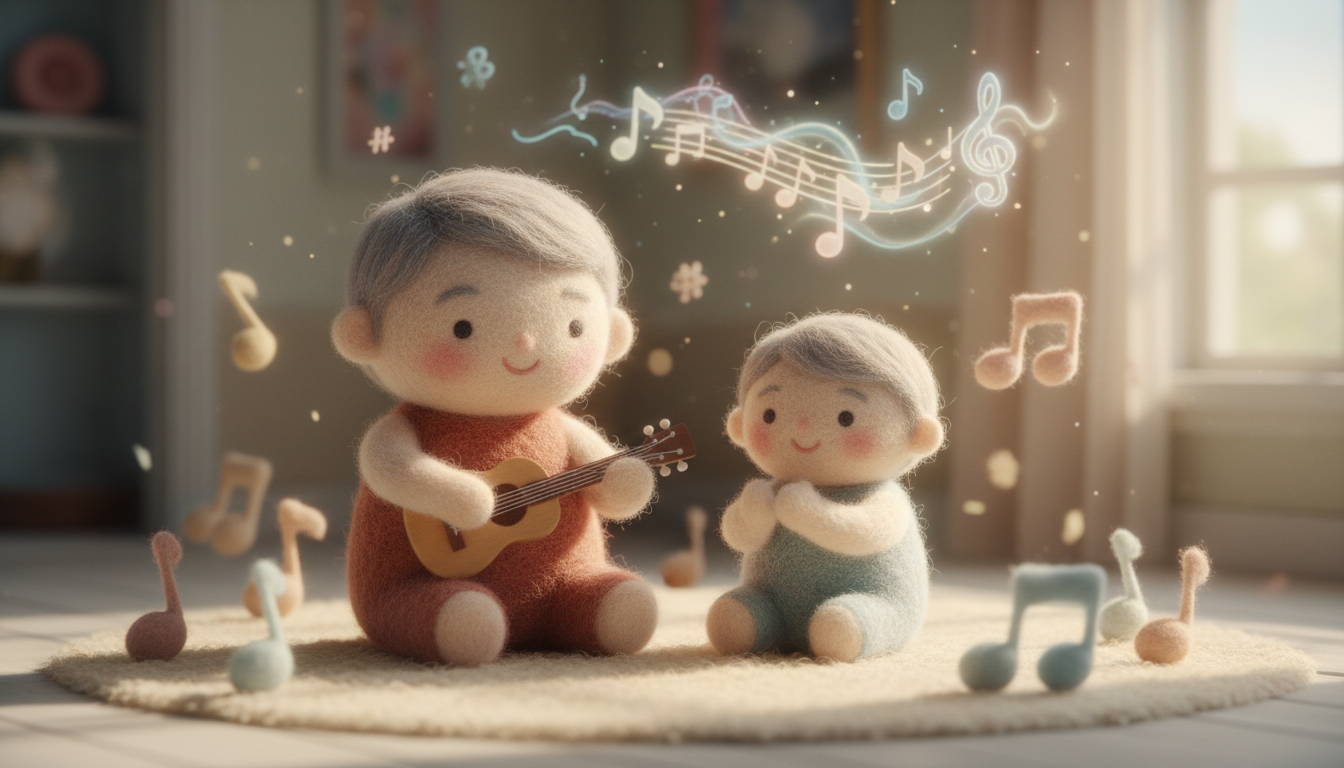
Picture the moment your baby first hears a lullaby, their tiny fingers curling in response. While the "Mozart Effect"—the idea that simply listening to classical music can boost intelligence—has been debunked as a fleeting effect, the active pursuit of music-making offers lasting benefits for the developing brain.
The Brain's "Complete Workout"
Science paints a compelling picture: neuroimaging studies show that playing a musical instrument is akin to a "complete workout" for the brain, engaging nearly every area simultaneously, particularly the visual, auditory, and motor cortices. Much like a well-rehearsed dance, disciplined and structured music practice strengthens these brain functions, allowing children to apply this newfound strength in various areas of life.
Key Developmental Areas Enhanced by Music
Linguistic and Auditory Processing
Music and language are like two dancers in perfect harmony, sharing several common processing pathways. Children who study music often demonstrate improved "phonological awareness"—the ability to discern subtle sounds—a critical foundational skill for reading and literacy.
Executive Function
Active music-making is a ballet of focused attention, working memory, and inhibitory control (the art of waiting patiently for one's turn to play). These are the core pillars of executive function, predicting academic success and emotional resilience as children grow.
Neuroplasticity and Connectivity
Learning music is like weaving a complex tapestry, increasing the volume and activity in the corpus callosum—the bridge between the left and right hemispheres of the brain. This enhanced connectivity allows messages to travel across the brain more swiftly and through more diverse pathways.
What You Can Do Today
- Start with Rhythm: Simple percussion, like clapping or drumming, helps children internalize patterns, forming the basis of mathematical and logical thinking.
- Active Singing: Singing involves breath control, pitch matching, and memorization, making it a high-intensity cognitive task for toddlers.
- Exposure to Complexity: While "Baby Shark" brings joy, introducing children to varied genres with complex harmonies and rhythms expands their "auditory vocabulary."
A Final Thought
Music is not merely an "extra-curricular" activity; it is a fundamental driver of neural connectivity. By encouraging active participation in music, you become your child's first and greatest teacher, offering them a unique cognitive advantage that resonates across all domains of learning.