Pregnancy
How to Prepare for a New Baby Without Buying Too Much
By Raised Editorial ·
The baby industry is a multi-billion dollar machine designed to convince you that your baby's survival depends on a smart-sock monitor. Here is the reality of what a newborn actually needs.
When you are expecting a baby, anxiety often masquerades as consumerism. We feel terrified of the unknown, so we buy things to feel prepared.
The baby product industry thrives on this anxiety. You will be told you need wiping warmers, specialized diaper bins, and socks that monitor your baby's heart rate.
Before you max out your credit card, let's look at the myth versus the biological reality of what a newborn actually requires.
Myth 1: You need a fully decorated nursery
The Reality: A newborn will not sleep in their nursery for the first six months.
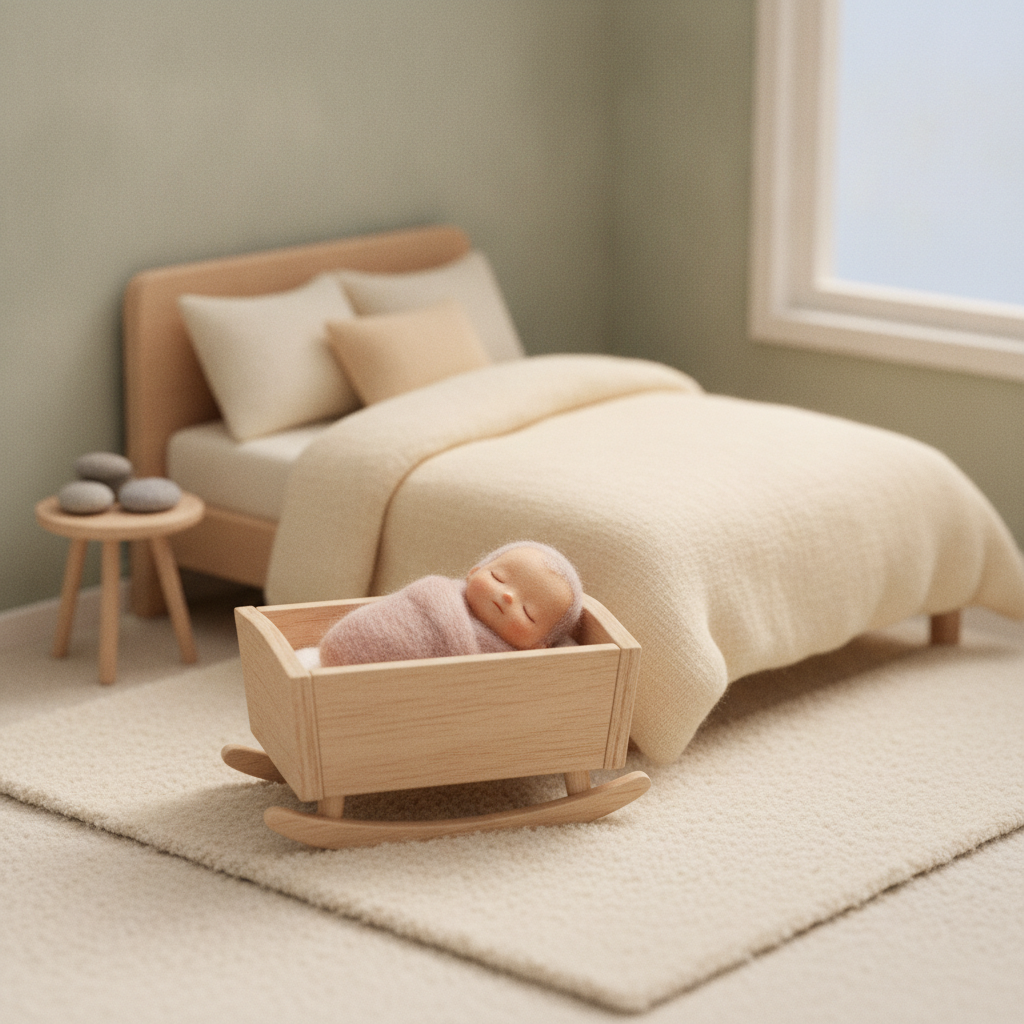
The American Academy of Pediatrics (AAP) strictly recommends that babies sleep in the parents' room, close to the bed, for at least the first six months to significantly reduce the risk of SIDS. A beautifully painted nursery is lovely for the parents, but biologically, the baby only needs a safe, firm bassinet or crib tucked next to your bed.
Myth 2: You need a changing table and specialized bins
The Reality: You will change diapers wherever you happen to be standing or sitting.
While a dedicated changing table looks nice, a foldable changing mat that you can throw on the living room rug or your bed is far more practical. As for diaper bins that individually wrap each diaper in plastic? They require expensive, proprietary refill cartridges. A regular foot-pedal bin with a tight-fitting lid works just as well and costs a fraction of the price.
Myth 3: You need high-tech monitoring
The Reality: Unless your pediatrician specifically prescribes a medical-grade monitor due to a health condition, "smart" socks and breathing monitors are unnecessary and often harmful to parents' mental health.
Clinical studies have shown that consumer-grade vital monitors frequently trigger false alarms, causing extreme anxiety for exhausted parents without actually preventing SIDS. A standard audio or video monitor so you can hear them when you leave the room is all you need.
What You Actually Need
If you strip away the marketing, a baby's needs in the first three months are stunningly simple:
- A safe place to sleep: A crib, bassinet, or Moses basket with a firm, flat mattress and no loose bedding.
- A way to transport them safely: A legally compliant, rear-facing car seat (this is the one item you should always buy new, never second-hand, to ensure it hasn't been in a crash).
- A way to feed them: Bottles and formula, or breast pads and nipple cream if you are nursing.
- Clothing and warmth: Bodysuits, sleepsuits, and blankets (cellular blankets are best for breathability).
- Hygiene: Diapers, wipes (or cotton wool), and diaper rash cream.
Everything else—the wipe warmers, the bottle sterilizer machines, the baby shoes (they don't walk!)—is optional.
Save your money. When the baby arrives, you might realize the only thing you desperately want to buy is an hour of sleep.