Postpartum & Recovery
How Partners Can Support a Postpartum Mum
By Raised Editorial ·
A postpartum mum is recovering from a major physical event while learning to keep a tiny human alive. Here is an actionable guide for partners on how to actually help.
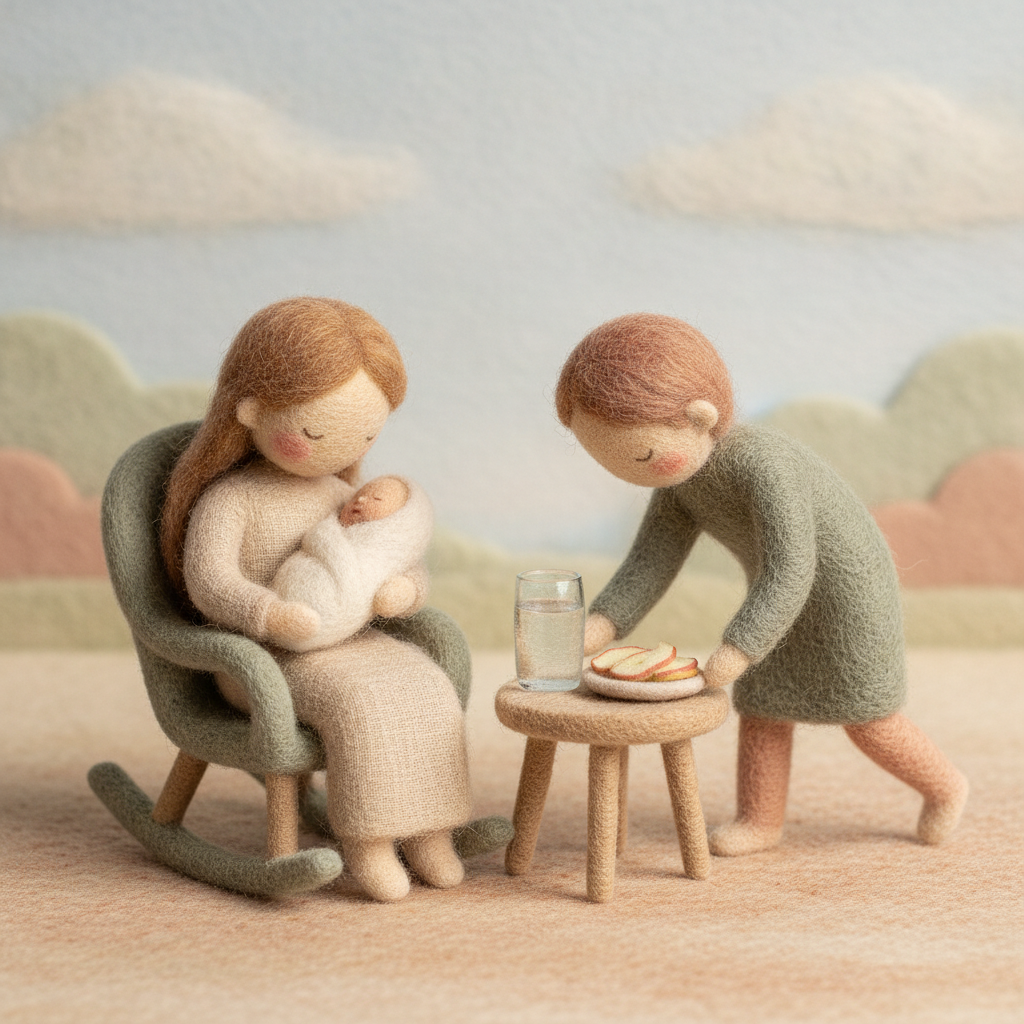
To the partners reading this: you have a critical job. The person who just gave birth is currently navigating a cocktail of extreme sleep deprivation, a massive hormonal crash, and physical recovery from what is essentially a major medical event.
Often, partners want to help but don't know exactly what to do. The worst thing you can say is, "Just tell me what you need me to do." A postpartum brain does not have the capacity to manage you.
To truly support a postpartum mum, you need to anticipate needs and take ownership. Here is a practical, actionable guide.
1. Become the "Gatekeeper"
In the early weeks, your partner's only jobs are to feed the baby, heal, and sleep. Your job is to manage the rest of the world.
- Manage Visitors: You are the bouncer. Do not let people drop in unannounced. When visitors are over, you are the one who politely but firmly tells them when it is time to leave (aim for 45 minutes max).
- Handle Communications: Your partner shouldn't be fielding 40 text messages asking for updates. Send a group text and let everyone know that you are taking a break from phones, but you will share photos when you are ready.
2. Take Ownership of the Night Shift
If your partner is exclusively breastfeeding, they have to wake up. But that doesn't mean you get to sleep through the night.
When the baby wakes up, you get up first. You change the diaper, you bring the baby to your partner in bed, and you fetch a glass of water. When the feed is done, you take the baby back, burp them, and resettle them in the bassinet. This cuts your partner's awake time in half.
If you are using formula or pumped milk, take the baby into a different room for a completely separate shift (e.g., you take 9 PM to 2 AM) so your partner can get unbroken sleep.
3. Hydration and Nutrition are Your Department
Breastfeeding burns up to 500 calories a day and requires intense hydration. Often, a new mum is "nap trapped" under a sleeping baby and cannot reach food.
- Do not ask, "Are you hungry?" Just bring food.
- Bring one-handed snacks (granola bars, sliced apples, sandwiches) that can be eaten while holding a baby.
- Every time she sits down to feed the baby, silently place a large glass of water next to her.
4. Validate, Don't "Fix"
Around day three, the "Baby Blues" will likely hit due to a massive hormonal drop. Your partner may cry uncontrollably for no logical reason.
Men, in particular, often default to "fix-it" mode. Do not try to fix this. Do not offer logical solutions. Just sit next to her, put your arm around her, and say, "This is incredibly hard. You are doing an amazing job, and I am right here with you."
Watch for the Red Flags
You are the first line of defense for maternal mental health. According to Postpartum Support International, you need to watch for signs of Postpartum Depression and Anxiety. If she stops sleeping even when the baby sleeps, expresses thoughts of harming herself, or seems entirely disconnected from the baby, it is your job to gently but firmly call her doctor.