Feeding
How Much Should a 1 Year Old Eat: Portion Sizes and Pickiness
By Raised Editorial ·
Parents are often shocked when their 1-year-old suddenly stops eating. Here is the clinical truth about toddler portion sizes, the normal appetite drop, and how to avoid mealtime battles.
One of the most common reasons parents of 1-year-olds seek pediatric advice is a sudden, terrifying drop in their child's food intake.
A baby who gleefully ate two bowls of oatmeal at 10 months old will suddenly, at 13 months, eat exactly three blueberries for breakfast and refuse everything else.
Parents often panic, assuming the child is sick, starving, or developing a severe behavioral issue. In reality, this sudden shift is a perfectly healthy, biologically necessary milestone.
Here is the clinical truth about how much a 1-year-old actually needs to eat, why their appetite plummets, and how to structure mealtimes to prevent the development of a picky eater.
The Biological "Appetite Drop"
During their first year of life, a baby's growth is explosive. The average baby triples their birth weight by their first birthday.
To fuel that massive, rapid expansion, infants have a ferocious appetite. However, after the first birthday, growth slows down dramatically. A toddler may only gain 3 to 5 pounds over the entire second year of life.
Because they are no longer growing at an explosive rate, their caloric needs plummet. Their appetite drops to match their slower growth rate.
Furthermore, toddlers become highly mobile (walking and climbing) and intellectually engaged with the world. Sitting in a highchair to eat is suddenly incredibly boring compared to exploring the living room.
Realistic Toddler Portion Sizes
Parents frequently overestimate how much food a toddler needs, leading to unnecessary anxiety when the child doesn't clear their plate.
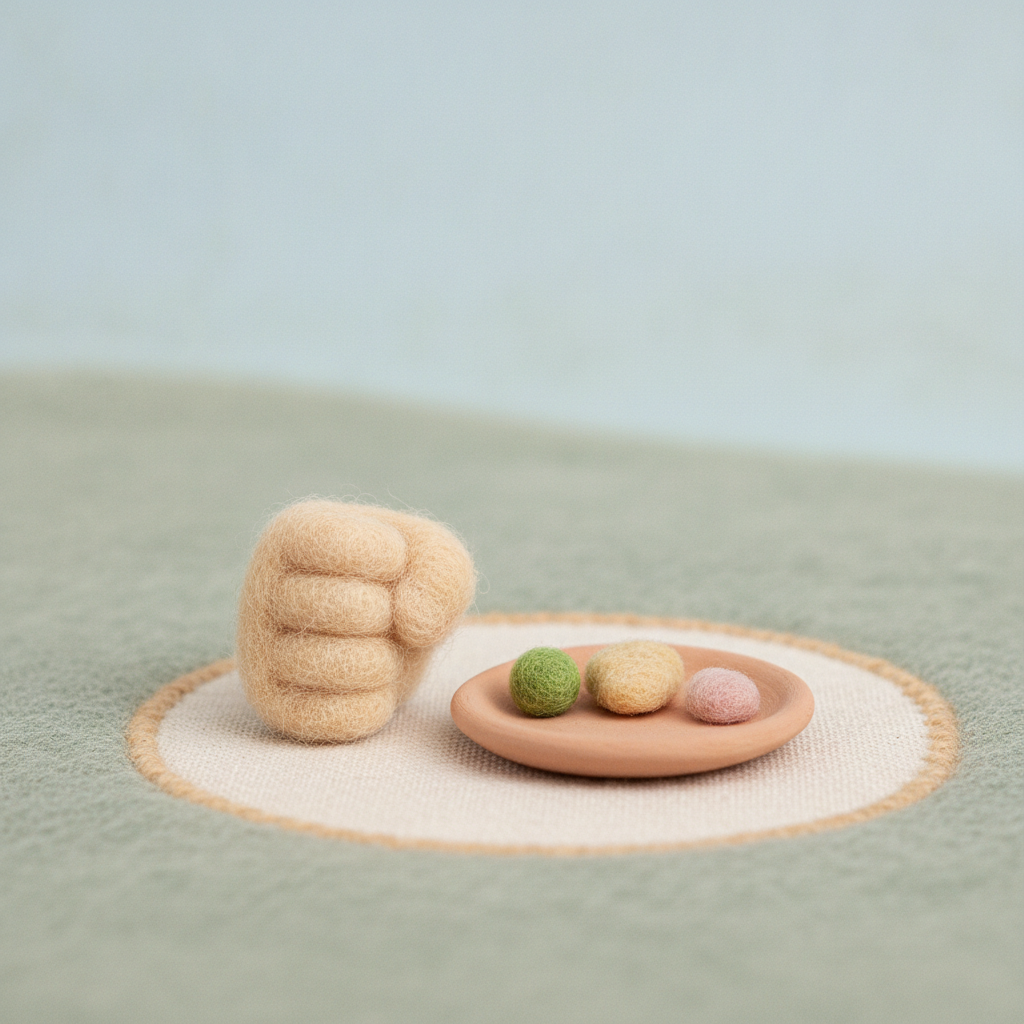
A 1-year-old's stomach is roughly the size of their clenched fist. It cannot hold a large adult-sized meal.
The clinical guideline for a toddler portion size is 1 tablespoon of food per year of age, for each type of food offered.
For a 1-year-old, a complete, nutritionally adequate meal might look like:
- 1 tablespoon of shredded chicken
- 1 tablespoon of peas
- 1 tablespoon of mashed sweet potato
That is a total of three tablespoons of food. If your 1-year-old eats that much, they have eaten a full meal.
The Division of Responsibility
When a toddler refuses to eat, parents often resort to bargaining, bribing, or force-feeding (e.g., "Just one more bite of chicken and you can have a cracker," or flying the spoon in like an airplane).
Clinical dietitians strongly warn against this. Pressure creates anxiety around food, which is the root cause of chronic picky eating.
To prevent mealtime battles, the AAP and pediatric dietitians endorse The Division of Responsibility, a foundational feeding framework developed by feeding expert Ellyn Satter.
The framework dictates a strict separation of power during mealtimes:
The Parent's Job:
- To decide WHAT food is offered (providing balanced, nutritious options).
- To decide WHEN food is offered (maintaining a schedule of 3 meals and 2 snacks).
- To decide WHERE food is offered (at the table, without screens or distractions).
The Toddler's Job:
- To decide WHETHER to eat the food provided.
- To decide HOW MUCH of it to eat.
Once you place the plate in front of your 1-year-old, your job is completely done. You must relinquish control.
If they eat nothing, say, "Okay, you're listening to your tummy! We will have a snack in two hours." Do not offer them a separate "backup meal" of crackers or milk, as this teaches them that holding out results in preferred junk food. Trust that a healthy toddler will not voluntarily starve themselves; they will simply eat a larger breakfast the next day to compensate for a skipped dinner.