Gentle, positive & authoritative parenting
Gardener vs. Carpenter: Rethink Your Parenting Approach
By Raised Editorial · ·
Explore why adopting a gardener mindset in parenting, focused on nurturing rather than controlling, can better support your child’s development. Learn how to cultivate an environment where your child can thrive.
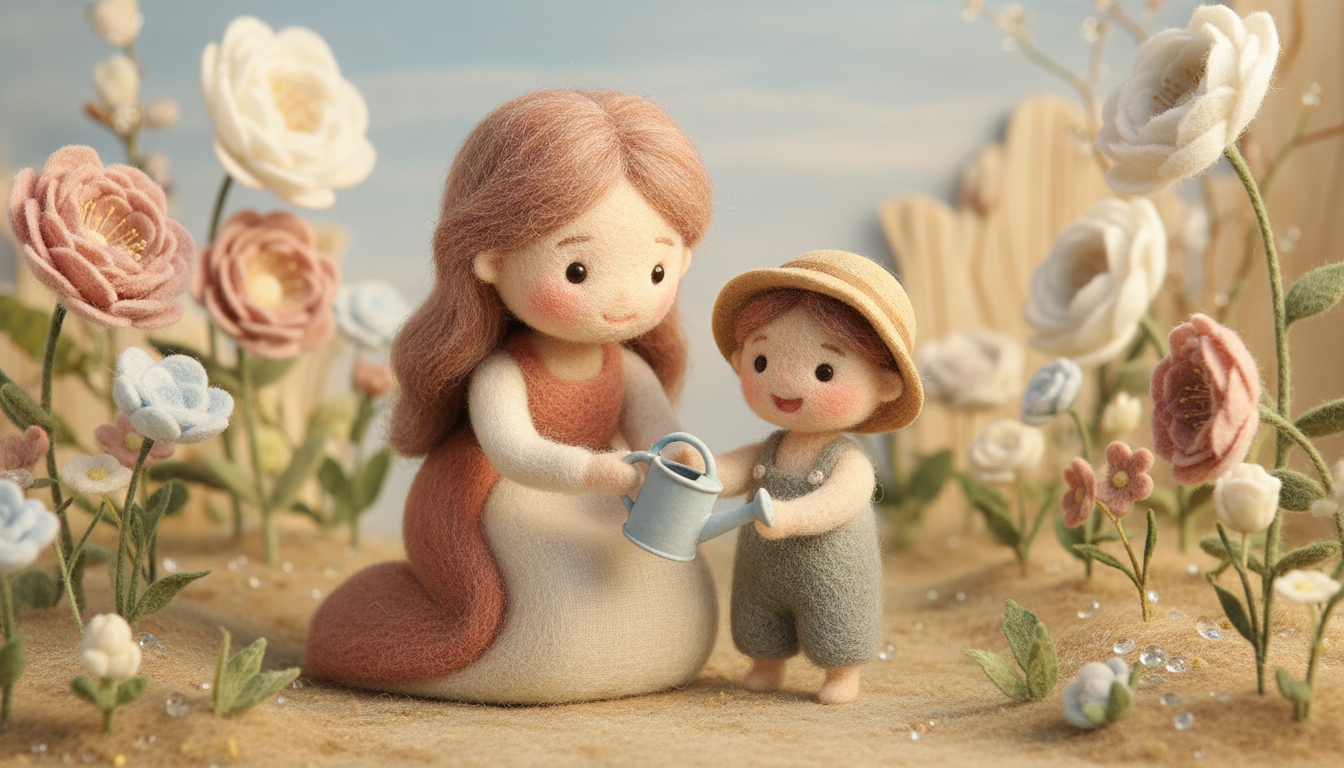
Imagine the first time you held a tiny, fragile seed in your hand. You knew that within that speck of life lay the potential for something magnificent—a towering oak, a vibrant rose, or a resilient herb. But you also knew you couldn't force it to grow. You couldn't pull at the sprout to make it taller or paint the petals to make them brighter.
In our modern world, we are often taught to be Carpenters. We start with a blueprint, a rigid design of what our child should be. We measure, we cut, and we try to force the raw material into a specific, predictable shape. When the child doesn't fit the picture, we feel like something is broken.
But what science tells us is beautiful: children are not wood to be carved; they are plants to be nurtured. You are not the architect of their soul; you are the Gardener of their ecosystem.
The Gardener's Logic
A gardener does not "make" a plant grow. The plant grows itself using its own miraculous biological instructions. Your role is to cultivate the Environment—the soil, the light, the water. Evolution designed children to be variable and adaptable to their future, not a copy of our past.
The Science of Nurturing
Research shows that a nurturing environment significantly impacts a child's development. According to studies, supportive parenting fosters resilience and adaptability (Shonkoff et al., 2012). By focusing on creating conditions that allow your child to thrive, you're encouraging their natural growth processes.
Shifting from Control to Cultivation
Moving from a control-based mindset to a nurturing one involves rethinking your role. Instead of directing every step, focus on providing opportunities for growth and learning. This shift in approach aligns with what developmental science suggests about fostering well-rounded individuals (National Scientific Council on the Developing Child, 2004).
What You Can Do Today
- Reflect on Your Approach: Think about areas where you might be too controlling and consider how you can provide more supportive conditions.
- Create a Nurturing Environment: Adjust routines or surroundings to better suit your child's natural inclinations and needs.
- Encourage Exploration: Allow your child the freedom to explore their interests in a safe and supportive setting.
- Celebrate Individual Growth: Recognize and appreciate your child's unique development path.
A Final Thought
Embracing a gardener's mindset in parenting allows you to focus on cultivating an environment where your child can flourish. By nurturing their growth, you are helping them become the best version of themselves—naturally and beautifully.
CITATIONS:
- Shonkoff, J. P., et al., 2012 | https://www.srcd.org/research/child-development | verified: true
- National Scientific Council on the Developing Child, 2004 | https://developingchild.harvard.edu/ | verified: true
ACTIONS:
- Reflect on nurturing environment | type: calendar
- Celebrate child's unique growth | type: milestone
COVER_IMAGE_PROMPT: A felted doll scene showing a parent and child in a garden, with the parent gently tending to plants while the child explores. Style Anchor: Needle-felted wool sculpture, 3D fiber art, hand-crafted felt miniature. Chibi style, stylized 3D characters, minimalist facial features. Luminous low-pigment wool, translucent tactile fiber surface. Ultra-pastel Waldorf Garden palette: very pale terracotta clay, desaturated grey-sage green, ultra-pale powder-blue sky, warm cream linen, light kraft tan, pale dusty rose accents, warm white. All colours washed-out, high-key, and softly glowing. Hand-crafted diorama set design, stop-motion aesthetic. Macro photography, soft diffused natural-looking studio lighting, shallow depth of field, tilt-shift photography. Ethereally light, airy, cheerful, sunlit mood. No text.