Baby
Why Your Baby Sleeps Better on You Than in the Cot
By Raised Editorial ·
It is the most common complaint of early parenthood: the baby sleeps peacefully in your arms, but wakes up screaming the second they touch the crib mattress. Here is the evolutionary biology behind the 'contact nap.'
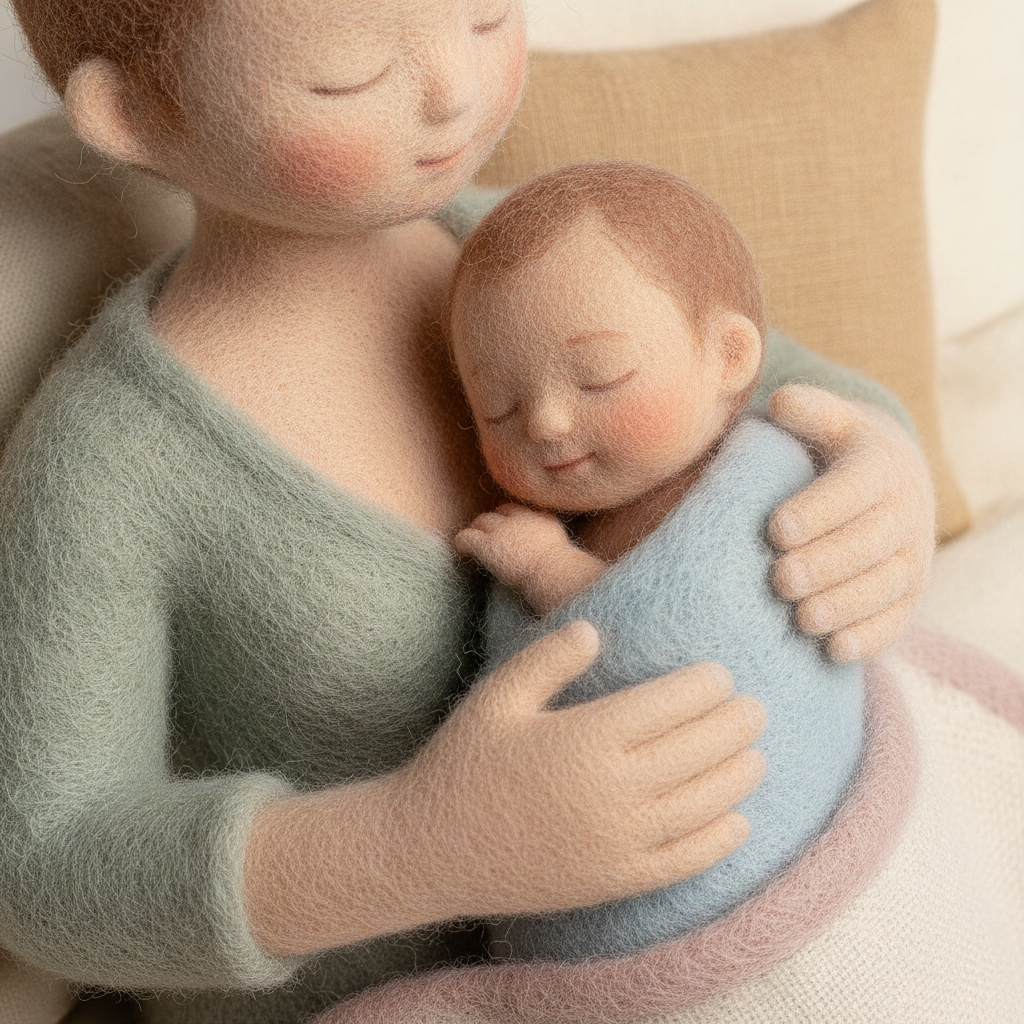
You are sitting in a dark room, exhausted. Your baby has been sound asleep on your chest for 45 minutes. They are breathing deeply, completely limp.
You decide it is time. You slowly, painstakingly stand up. You lower them into the crib like you are defusing a bomb. Their back touches the mattress. You hold your breath.
Five seconds later, their eyes snap open, their arms flail, and they start screaming.
Why does this happen? Why can a baby sleep through a loud TV show while lying on your chest, but wake up instantly in a quiet, dark, flat crib?
The answer is entirely biological. Your baby is not manipulating you. They are acting on a survival instinct that is millions of years old.
The Evolutionary Survival Mechanism
For most of human history, a baby separated from its caregiver was a baby in extreme danger. If a newborn was left alone on the ground in the prehistoric wilderness, they were vulnerable to cold and predators.
Over millions of years, evolution hardwired a powerful alarm system into the infant brain: If you are not being held, you are not safe. Wake up immediately.
When your baby is lying on your chest, their senses are telling them that they are safe:
- Hearing: They hear your heartbeat, a sound they listened to for nine months in the womb.
- Smell: They can smell your skin and milk.
- Touch: They feel the warmth of your body and the rhythmic rise and fall of your breathing.
- Proprioception: They are gently curled in a fetal position, which feels secure and familiar.
When you place them in a crib, all of these sensory inputs instantly disappear. The surface is flat and cold. There is no heartbeat. To a primitive infant brain, this sudden sensory void means: I have been abandoned. Sound the alarm.
The Moro Reflex (The Startle Reflex)
The physical sensation of being lowered into a crib also triggers a specific biological response: the Moro reflex.
When a baby feels a sudden loss of support or a sensation of falling (which is exactly what happens when you lower them from your chest to the mattress), their nervous system reacts violently. Their arms shoot out, their fingers splay, and they gasp for air. This reflex is designed to help a falling primate infant grab onto its mother's fur.
Even if you lower them gently, the sudden transition from a curved, warm chest to a flat, firm mattress is often enough to trigger the Moro reflex, shocking them fully awake.
When Does This End?
The intense biological drive to sleep on a caregiver (often called the "Fourth Trimester") is strongest during the first 3 to 4 months of life.
Around 4 or 5 months, their neurological system matures. The Moro reflex begins to integrate (disappear), and their sleep cycles become more organized. They begin to develop object permanence, eventually understanding that they can be safe even if they are not touching you.
How to Survive the "Contact Nap" Phase
If you are in the thick of the newborn phase, you cannot fight biology. However, you can use biology to your advantage to make the transfer to the crib slightly easier:
- Warm the Mattress: Use a heating pad to warm the crib mattress before placing the baby down. (Crucial: Remove the heating pad before the baby goes in so it is warm, not hot, and there are no electrical cords).
- The "Feet-Bum-Back-Head" Transfer: Never lower a baby horizontally. The sensation of falling backwards triggers the Moro reflex. Instead, lower them feet first, then their bottom, then their back, and finally their head.
- Keep Your Hands on Them: Once they are flat on the mattress, do not immediately walk away. Keep one hand firmly on their chest and the other on their head for a full minute to provide deep pressure and mimic the feeling of being held.
- Embrace the Swaddle: A tight swaddle mimics the confined space of the womb and physically prevents the Moro reflex from waking them up.