Sleep
Baby Sleep: A Practical Guide for Overtired Parents
By Raised Editorial ·
When you are running on empty, baby sleep advice can feel overwhelming. This is a practical, science-backed guide to what is normal, what helps, and how to survive the hardest nights.
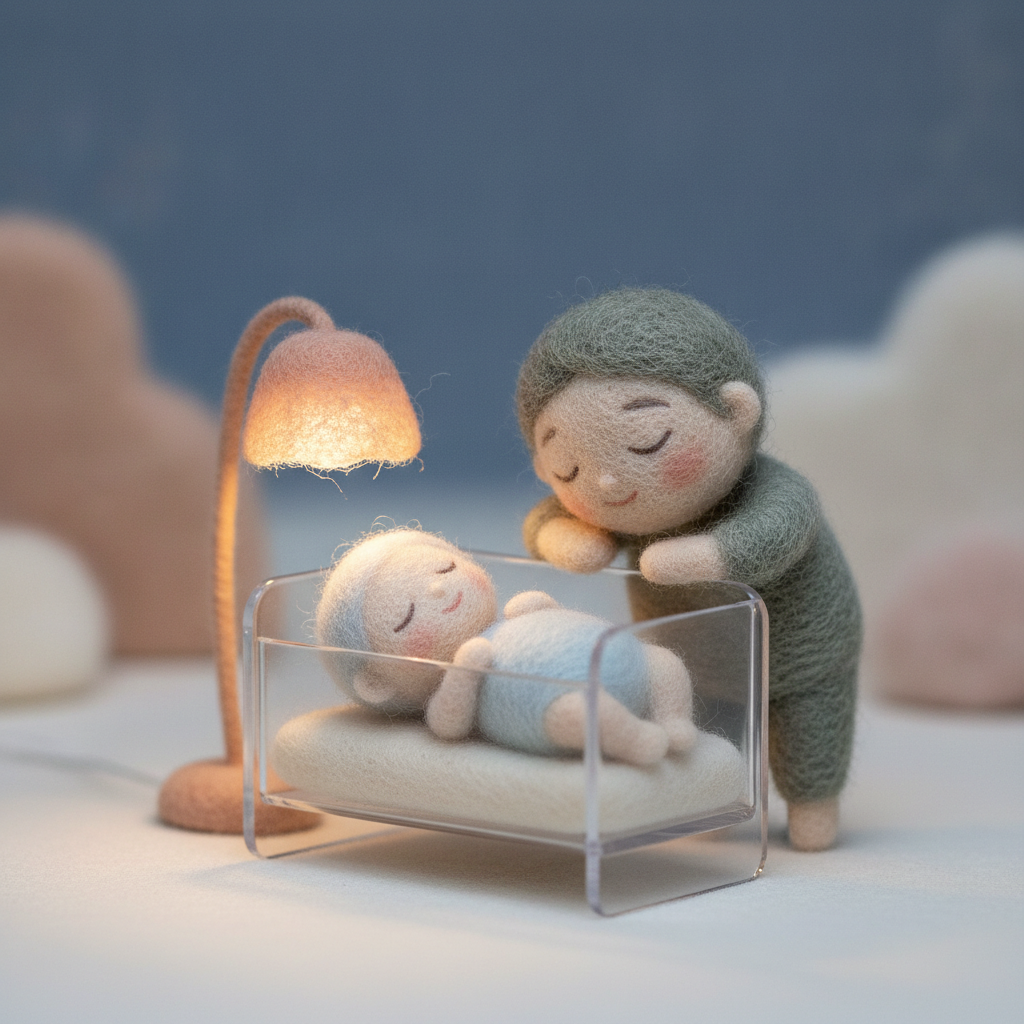
You are exhausted. You are reading this while holding a baby who only sleeps when moving, or while staring at a ceiling at 3 AM. The hardest part of infant sleep isn't just the tiredness—it is the overwhelming amount of conflicting advice telling you that you are doing it wrong.
Here is the truth: infant sleep is not a math problem to solve, and it is not a reflection of your parenting. It is a biological process that develops slowly.
The "Overtired" Trap
One of the most common reasons babies fight sleep is that they are already too tired. When a baby stays awake past their natural sleep window, their body releases cortisol and adrenaline to keep them going. They aren't fighting sleep because they aren't tired; they are fighting it because their body is chemically wired to stay awake.
The key is catching them before they cross that line. Look for early sleep cues: staring blankly, turning away from play, or reddish hues around the eyebrows. By the time they are crying and arching their back, the overtired trap has sprung.
Contact Naps and Sleep Associations
Many parents worry they are "ruining" their baby's sleep by rocking them, feeding them, or holding them for naps.
From a developmental standpoint, you cannot spoil a baby. Babies are biologically wired to seek closeness because, from an evolutionary perspective, being put down in a dark cave alone was dangerous. Wanting to sleep on you is a sign that their survival instincts are working perfectly.
Eventually, you may want to gently practice putting them down "drowsy but awake" if contact naps are no longer working for you, but doing what you need to survive the early months is entirely okay.
Safe Sleep is Non-Negotiable
While how you soothe your baby is flexible, safe sleep is not. The American Academy of Pediatrics strictly recommends that babies sleep on their backs, on a firm, flat surface, with no loose blankets, pillows, bumpers, or soft toys in the sleep space.
Even when you are exhausted, never let your baby sleep on a sofa or armchair with you, as this significantly increases the risk of suffocation.
The Real Sleep Goal
The goal of baby sleep isn't to get them sleeping 12 hours straight immediately. The goal is to build a rhythm that helps your family function.
Focus on consistent routines. A simple, predictable series of events before bed—like a bath, a feed, a song, and sleep—signals to their developing brain that it is time to wind down.
And most importantly, give yourself grace. You are doing a hard job on very little rest.