Postpartum & Recovery
Baby Blues vs Postpartum Depression: How to Tell the Difference
By Raised Editorial ·
It is normal to cry in the weeks after giving birth. But when do those tears cross the line into Postpartum Depression? Here is the clinical difference between a normal hormone crash and a condition that requires help.
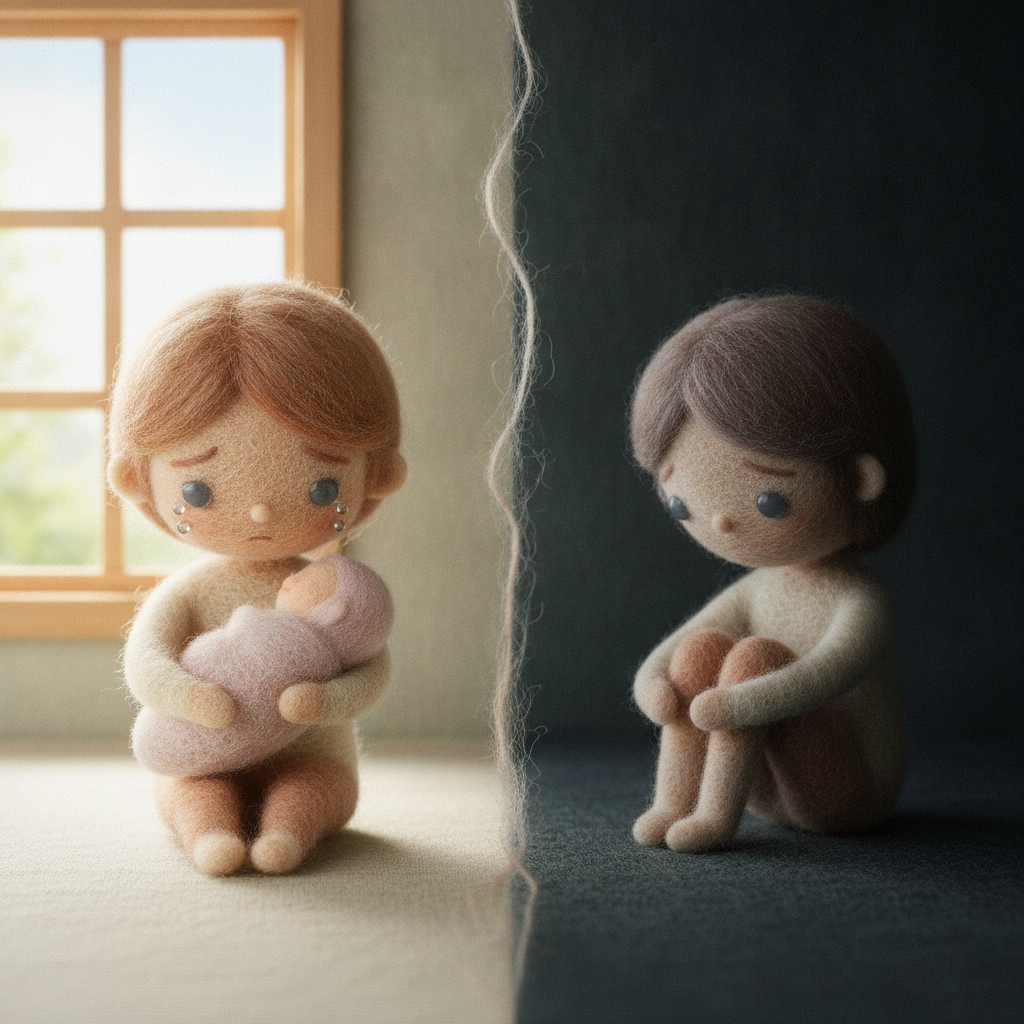
You are staring at your beautiful, healthy newborn, and instead of feeling overwhelming joy, you just want to cry. Or maybe you are already crying, and you can't figure out why.
First, take a deep breath. You are not broken, and you are not a bad parent.
Up to 80% of people experience the "Baby Blues" after giving birth. However, roughly 1 in 7 will develop Postpartum Depression (PPD). Because the symptoms overlap, it can be incredibly difficult to know if what you are feeling is a normal part of recovery or a medical condition requiring treatment.
According to the American College of Obstetricians and Gynecologists (ACOG), the difference comes down to timing and severity.
The "Baby Blues": A Hormonal Crash
The "Baby Blues" are a direct physiological reaction to childbirth. When you deliver the placenta, your body experiences the single largest, most sudden drop in hormones a human can endure.
The Timeline:
- Starts: Usually around day 3 or 4 after birth.
- Ends: Generally resolves on its own within 10 to 14 days.
The Symptoms:
- Unexplained crying spells.
- Mood swings (feeling joyful one minute and deeply sad the next).
- Feeling overwhelmed and anxious about baby care.
- Irritability.
The Key Identifier: Despite the tears and exhaustion, people with the Baby Blues generally still experience moments of joy. They can still sleep (when the baby sleeps) and can function enough to care for themselves and the newborn.
Postpartum Depression (PPD): A Medical Condition
Postpartum Depression is not a character flaw or a sign of weakness; it is a very real, highly treatable complication of childbirth. Unlike the Baby Blues, PPD does not go away on its own.
The Timeline:
- Starts: Can start at any point within the first year after giving birth (though it often begins between weeks 1 and 3).
- Ends: Requires treatment (therapy, medication, or both) to resolve.
The Symptoms:
- Severe mood swings or a constant, deep sadness that does not lift.
- A complete inability to sleep (insomnia), even when the baby is sleeping peacefully.
- Feeling a lack of connection or bonding with the baby.
- Overwhelming feelings of worthlessness, guilt, or inadequacy as a parent.
- A loss of interest in things that usually bring you joy.
- Intrusive, frightening thoughts about hurting yourself or the baby.
The Key Identifier: PPD interferes with your ability to function. The sadness and anxiety are so heavy that caring for the baby, or even getting out of bed, feels impossible.
When to Seek Help
ACOG recommends seeking professional help immediately if:
- Your symptoms last longer than two weeks.
- Your symptoms are getting worse, not better.
- You are having difficulty caring for yourself or your baby.
- You are experiencing severe anxiety or panic attacks.
- Crucially: If you are having any thoughts of harming yourself or your baby, this is a medical emergency. Go to an emergency room or call a crisis hotline immediately.
There is no medal for suffering in silence. Postpartum Depression is a biological illness, and just like an infection, it requires medical care to heal. Talk to your midwife, obstetrician, or a trusted family member. Help is available, and with treatment, you will feel like yourself again.