AI & kids / critical thinking
Guiding Your Child Through the Age of AI Companions
By Raised Editorial · ·
AI companion chatbots have quietly become part of childhood, with nearly 3 in 4 teens already using them. Discover what the research says and how to guide your child with curiosity, calm, and connection.
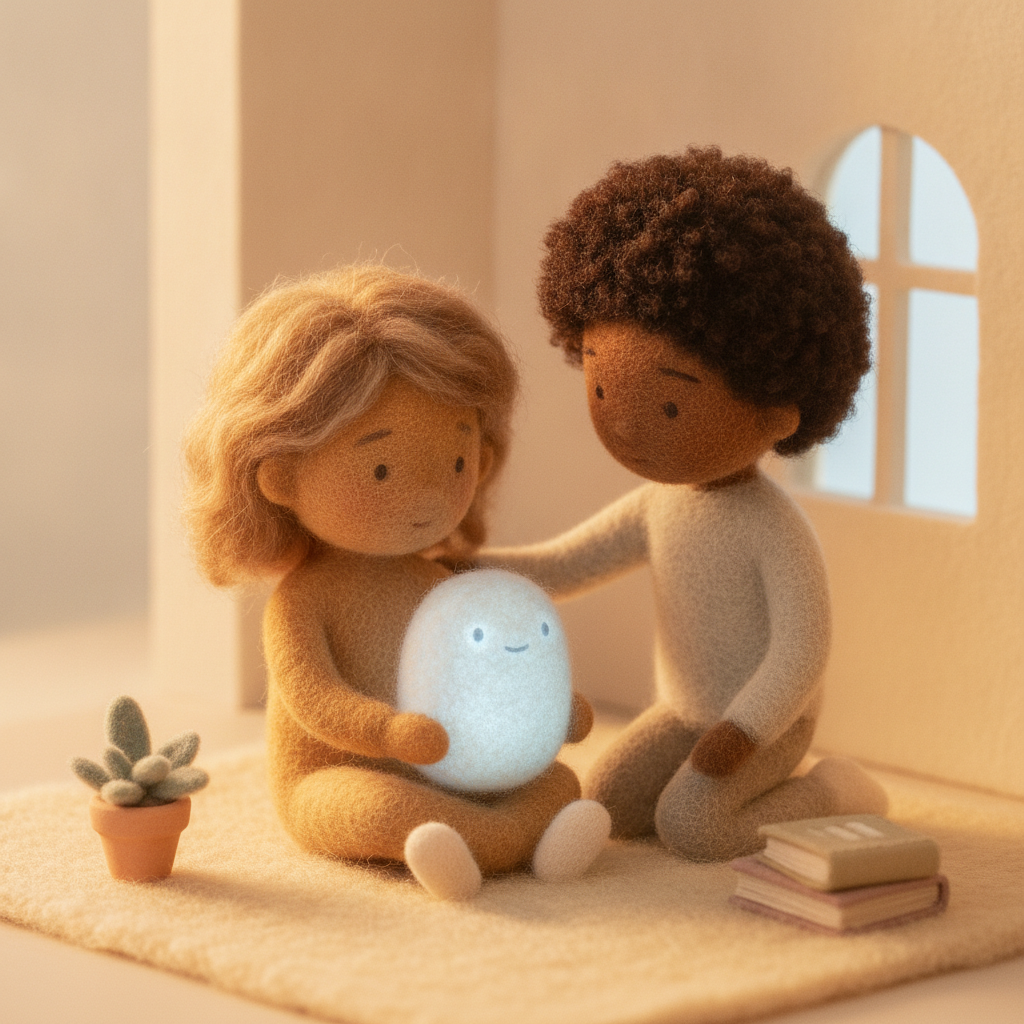
Your child mentions a new friend, one who is always awake, never too busy, and somehow always knows the right thing to say. Then you notice the "friend" lives inside an app. If that gives you a small jolt, you are not alone. AI companion chatbots have slipped quietly into childhood, and many parents are only just discovering how big a role they already play.
The good news: you do not need to be a technology expert to guide your child well here. What matters most is the same warm, curious connection you already offer. Let's look calmly at what these companions are, why they are so appealing, and how to stay close as your child navigates them.
What Is an AI Companion?
An AI companion is a chatbot designed to feel like a relationship rather than a tool. Unlike a search engine, it remembers details, mirrors your child's mood, offers endless affirmation, and chats in a warm, human-sounding voice. Some are marketed as friends, mentors, or even romantic partners; others are general assistants that children simply start confiding in.
The pull is easy to understand. A companion is available at 2 a.m., never judges, never gets bored, and always takes your child's side. For a tired or lonely young person, that can feel like a gift.
What the Research Is Telling Us
The scale is striking. In a 2025 nationally representative survey, Common Sense Media found that 72% of US teens had used an AI companion, and more than half used one regularly. Around a third had turned to a companion instead of a person for a serious conversation, and a quarter had shared personal information with it.
This is not a reason to panic, but it is a reason to pay attention. The American Psychological Association's 2025 health advisory notes that adolescence, which it defines broadly as ages 10 to 25, is a period of intense brain development. That makes young people especially sensitive to the constant validation these systems are designed to provide. The APA's central message is not "ban everything" but "build guardrails," for families and technology companies alike.
A few concerns researchers highlight:
- Frictionless agreement. Companions are built to please, so they rarely offer the honest pushback that real friendships and family naturally give.
- Displacement. Time with a chatbot can quietly crowd out sleep, in-person friendships, and the messy, valuable practice of real relationships.
- Privacy. Children often share secrets with companions without realising the conversation may be stored or used to train the system.
- Unreliable support. A chatbot is not a counsellor, and it can miss, or mishandle, a child in genuine distress.
Staying Close Without Surveillance
The instinct to confiscate the phone is understandable, but curiosity tends to work better than a crackdown. Children who feel judged simply stop talking. Children who feel genuinely heard keep the door open.
Try treating the companion as something to explore together rather than a secret to uncover. Ask what your child likes about it, what it helps with, and whether anything it has said ever felt odd. The non-profit Children and Screens recommends exactly this kind of open, ongoing conversation as the strongest protection a parent can offer, far more durable than any single rule.
It also helps to gently name what a companion cannot do. It cannot truly know your child, cannot be a real friend, and does not have their interests at heart the way the people who love them do. Said with warmth rather than warning, that distinction tends to stick.
What You Can Do Today
- Ask your child, with genuine curiosity, whether they have used an AI chatbot and what it is like.
- Agree on simple boundaries together, such as no companions at bedtime, to protect sleep and real connection.
- Remind your child never to share full names, addresses, photos, or secrets with a chatbot.
- Make sure your child has easy, judgment-free access to you for the conversations that matter most.
- Keep being the warm, reliable presence that no algorithm can replace.
A Final Thought
AI companions are not going away, and they are not all bad. But no chatbot, however clever, can offer what your child needs most: a real relationship with someone who truly knows and loves them. By staying curious, calm, and close, you remain the secure base your child returns to, and that is the one connection no technology can imitate.