Feeding
6 Month Feeding Schedule: Milk, Solids, and Sleep
By Raised Editorial ·
At 6 months, your baby's daily routine gets significantly more complicated with the introduction of solid foods. Here is a clinical framework for balancing milk, solids, and 3 daily naps.
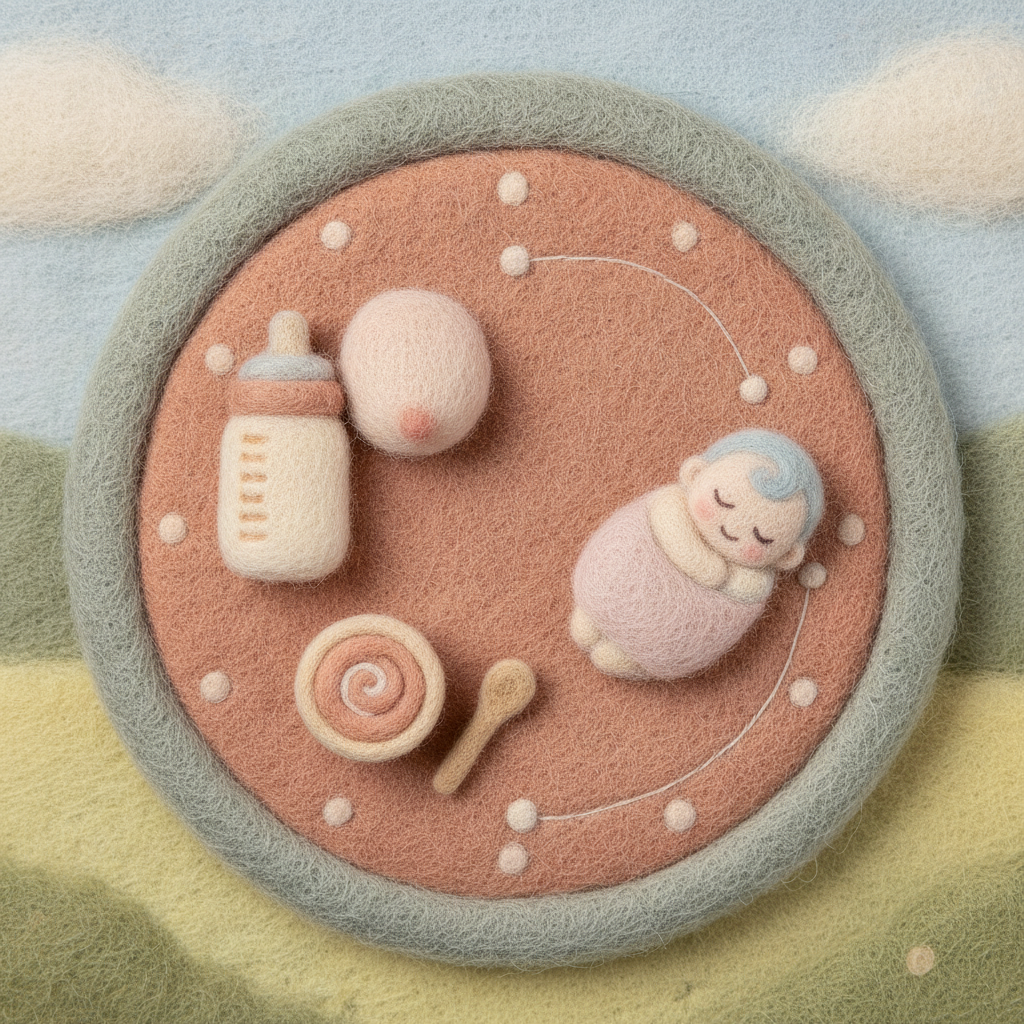
The 6-month mark is a chaotic transition period. You have just figured out your baby's milk and nap routine, and suddenly, you are supposed to introduce a highchair, purees, and a massive amount of cleanup into the schedule.
Many parents struggle to figure out when to feed the baby solids. If you feed them too close to a milk feed, they are too full to try the food. If you feed them too close to a nap, they are too cranky and tired to sit in a highchair.
According to pediatric feeding therapists, the goal at 6 months is not to replace milk, but to practice eating during a "happy, awake window."
Here is a clinical framework for structuring a 6-month-old's day, balancing 5 milk feeds, 1 solid meal, and 3 naps.
The Golden Rule: Milk Comes First
Until a baby is 12 months old, breast milk or formula remains their primary source of nutrition and calories.
At 6 months, a baby's digestive system cannot extract enough calories or fat from a spoonful of mashed carrots to sustain their rapid brain and body growth. Therefore, you must always offer breast milk or formula before you offer solid foods.
If you offer solids first, the baby will fill their tiny stomach with low-calorie vegetables and refuse their milk, which can quickly lead to weight loss and nutritional deficiencies.
- The Timing: The ideal time to offer a solid meal is 45 to 60 minutes after a full milk feed. They will not be starving and frantic, but they will have enough room in their stomach to playfully explore the new food.
The 6-Month Schedule Framework
At 6 months, most babies are awake for 2 to 2.5 hours at a time and take 3 naps a day. They only need one solid meal per day to start.
Here is what a typical, well-structured day looks like:
- 7:00 AM – Wake Up & Milk Feed #1: Offer a full feed of breast milk or formula immediately upon waking.
- 8:30 AM – The Solid Meal (Breakfast): 45 to 60 minutes after the milk feed. This is often the best time of day for solids because the baby is well-rested and in a good mood. Offer a small portion (1-2 tablespoons) of puree or soft finger foods (BLW).
- 9:00 AM – Nap 1: (Usually lasts 1 to 1.5 hours).
- 10:30 AM – Wake Up & Milk Feed #2: Full feed upon waking.
- 12:30 PM – Nap 2: (Usually lasts 1 to 1.5 hours).
- 2:00 PM – Wake Up & Milk Feed #3: Full feed upon waking.
- 4:15 PM – Nap 3 (The Catnap): This is usually a short, 30-to-45-minute nap to bridge the gap to bedtime.
- 5:00 PM – Wake Up & Milk Feed #4: Full feed upon waking.
- 7:00 PM – Bedtime Routine & Milk Feed #5: The final full feed of the day before sleep.
(Note: Breastfed babies may wake 1-3 times during the night for additional feeds. Formula-fed babies may sleep through or wake once).
The Goal of the 6-Month Meal
It is incredibly common for parents to feel frustrated that their 6-month-old only ate "half a teaspoon" of food after the parent spent 30 minutes preparing it.
You must adjust your expectations. The goal of the 6-month solid meal is not consumption; it is exposure and mechanics.
When you put your baby in the highchair, they are learning:
- Sensory Processing: What does this cold, slimy puree feel like on my hands and face?
- Oral-Motor Skills: How do I move this thick substance from the front of my tongue to the back of my throat without gagging?
- Social Routine: Eating is a social activity that we do sitting up at a table.
If the baby smears the food all over the tray, puts the spoon in their ear, licks it once, and then wants to get down, the meal was a massive developmental success.
Keep the meal short (10 to 15 minutes is plenty). As soon as the baby starts rubbing their eyes, arching their back, or throwing food on the floor in frustration, the meal is over. Take them out of the chair, clean them up, and get ready for the next nap.