Feeding
12 Month Feeding Schedule: Meals, Snacks, Milk, and Naps
By Raised Editorial ·
At 12 months, the biological rule of 'milk first' completely flips. Here is a clinical guide to structuring a toddler's day so they get their calories from food rather than milk.
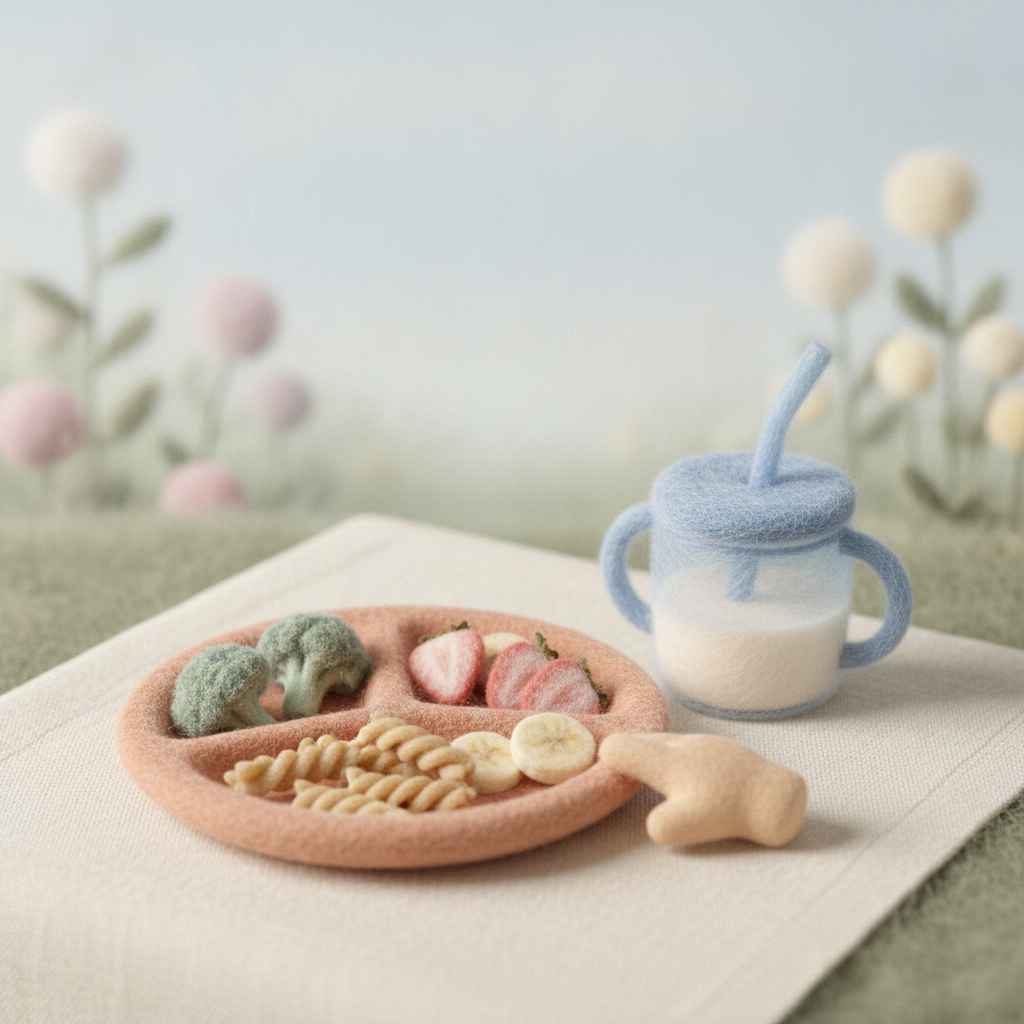
The first birthday marks a massive biological shift in a child's nutritional requirements.
For the first 12 months of life, breast milk or formula was the primary source of nutrition, and solid foods were supplementary (mostly for practice and exposure).
At 12 months, this dynamic completely flips. Solid table foods must now become the primary source of calories and nutrients, and milk steps down to become a beverage.
This transition can be incredibly rocky. If a toddler continues to drink massive amounts of milk (over 24 ounces a day), they will simply not have the appetite to eat solid food. This can lead to nutritional deficiencies, most notably severe iron-deficiency anemia (as cow's milk contains almost no iron and inhibits its absorption).
Here is a clinical framework for a 12-month schedule that prioritizes solid food intake and manages the transition to cow's milk (or other alternatives).
The New Rule: Food Comes First
Because solids are now the primary source of nutrition, you must flip the schedule. You must offer solid meals before you offer milk.
If a toddler wakes up and immediately drinks an 8-ounce bottle of milk, they will not be hungry for breakfast. Instead, offer them a solid breakfast upon waking, and serve milk in a cup alongside the meal, just as you would serve water.
Transitioning Off Formula and Bottles
According to the American Academy of Pediatrics (AAP) and pediatric dentists, the 12-month mark is the time to wean off both infant formula and bottles.
- Formula: Unless directed by a pediatrician for a specific medical reason, toddlers do not need "toddler formula." They can transition to whole cow's milk or a nutritionally equivalent plant-based milk (like fortified soy or pea milk, but not almond or oat milk, which are too low in protein and fat).
- Bottles: Prolonged bottle use alters the development of the palate and teeth and is a leading cause of ear infections and tooth decay. By 12 to 15 months, all liquids should be consumed from an open cup or a straw cup, not a bottle or a hard-spouted sippy cup.
The 12-Month Schedule Framework
At 12 months, most toddlers are awake for 3 to 4 hours at a time. Some are transitioning to 1 nap, but most still need 2 naps. They require 3 solid meals and 2 snacks a day.
Limit whole cow's milk to no more than 16 to 24 ounces a day to protect their appetite for iron-rich foods.
Here is what a typical, well-structured day looks like:
- 7:00 AM – Wake Up & Breakfast: Serve a solid breakfast (e.g., scrambled eggs and fruit). Offer 4 to 6 ounces of milk in a straw cup alongside the meal.
- 9:30 AM – Morning Snack: A small, high-energy snack (e.g., half a banana or a slice of cheese) with water.
- 10:00 AM – Nap 1: (Usually lasts 1 to 1.5 hours).
- 11:30 AM – Wake Up & Lunch: A solid meal (e.g., shredded chicken, peas, and pasta). Offer 4 to 6 ounces of milk in a cup.
- 2:00 PM – Afternoon Snack: (e.g., hummus and soft crackers) with water.
- 2:30 PM – Nap 2: (Usually lasts 1 to 1.5 hours).
- 5:30 PM – Dinner: The same meal the family is eating. Offer 4 to 6 ounces of milk in a cup.
- 7:00 PM – Bedtime Routine: If the toddler is still hungry, you can offer a small pre-bedtime snack or a final few ounces of milk, but make sure to brush their teeth afterward to prevent decay.
Expect the "Toddler Appetite Drop"
During their first year, a baby's growth rate is explosive. After their first birthday, their physical growth slows down dramatically.
Because they are not growing as fast, their caloric needs drop. It is extremely common for a 12-month-old to suddenly become much pickier or eat significantly less than they did at 9 months.
This "toddler appetite drop" is biologically normal. Do not panic and do not force them to eat. Your job is to provide healthy food on a predictable schedule; their job is to decide how much of it to eat.